
Atlantic hurricane season comes to an end with 21 named storms
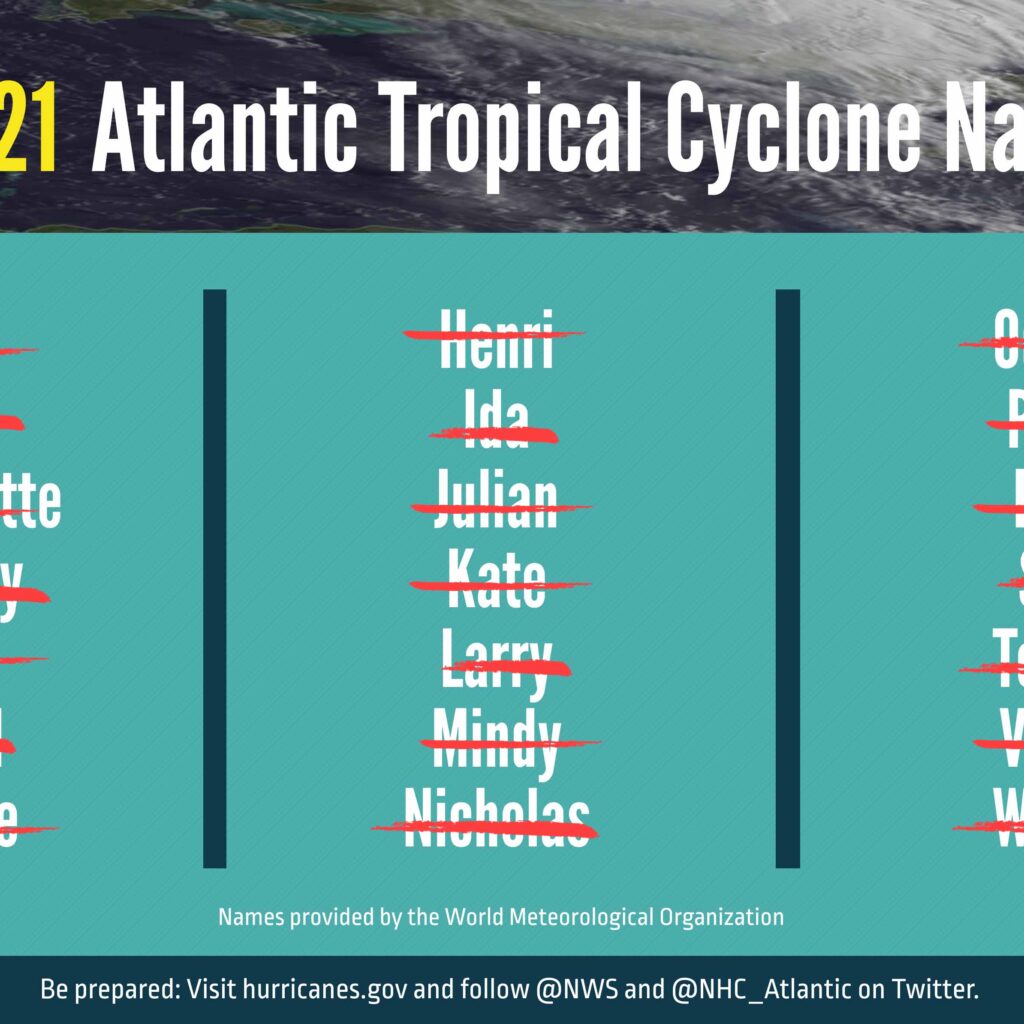
NOAA – The active 2021 Atlantic hurricane season officially concluded on Nov. 30 having produced 21 named storms (winds of 64 km/h or greater), including seven hurricanes (winds of 118 km/h or greater) of which four were major hurricanes of class three or higher (winds of 178 km/h or greater), according to a report from the National Oceanic and Atmospheric Administration.
“NOAA provided the science and services necessary to protect life and property before, during and after storms all season long,” said NOAA Administrator, Rick Spinrad in a news release. “From essential observations to advanced warnings to critical response actions, NOAA supports communities so they are ready, responsive and resilient to the impact of tropical cyclones each and every hurricane season.”
This year was the third most active year on record in terms of named storms, marks the sixth consecutive above-normal Atlantic hurricane season, and was the first time on record that two consecutive hurricane seasons exhausted the list of 21 storm names.
Scientists attribute the heightened hurricane activity in recent years to the warm phase of the Atlantic Multidecadal Oscillation that began in 1995 and favors more, stronger and longer-lasting storms. The Atlantic Multidecadal Oscillation is thought to be driven by a combination of internal climate variability and changes over time in small airborne particles, often referred to as aerosols, over the North Atlantic. However, the relative contributions of internal variability and aerosols to the observed Atlantic Multidecadal Oscillation remain uncertain. Additionally, the Intergovernmental Panel on Climate Change’s Sixth Assessment Report offsite link, released in August 2021, projects with high confidence that the global proportion of tropical cyclones that reach very intense (category 4-5) levels, along with their peak winds and rainfall rates, are expected to increase with climate warming at the global scale.
Storm activity during the 2021 season started early and quickly ramped up, as it was the seventh consecutive year with a named storm forming before the official start to the season on June 1, and held the earliest fifth named storm on record. As to why, Matthew Rosencrans, lead seasonal hurricane forecaster at NOAA’s Climate Prediction Center said “climate factors, which include La Niña, above-normal sea surface temperatures earlier in the season, and above-average West African Monsoon rainfall were the primary contributors for this above-average hurricane season.”