NOAA adjusts hurricane season forecast
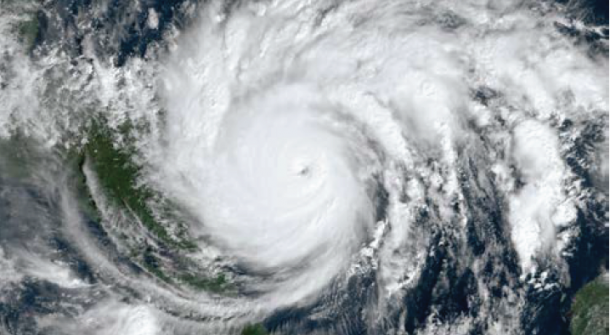
Photo credit: NOAA.
NOAA – As the North Atlantic hurricane season enters its traditional peak period, the United States National Oceanic and Atmospheric Administration (NOAA) has adjusted its forecast to take into account ongoing conditions which influence cyclonic activity.
The slightly lowered conditions still favor an above-normal 2022 Atlantic hurricane season, according to NOAA’s annual mid-season update issued Aug. 4 by the Climate Prediction Center, a division of the National Weather Service.
NOAA forecasters have slightly decreased the likelihood of an above-normal Atlantic hurricane season to 60 per cent (lowered from the outlook issued in May, which predicted a 65 per cent chance). The likelihood of near-normal activity has risen to 30 per cent and the chances remain at 10 per cent for a below-normal season.
“We’re just getting into the peak months of August through October for hurricane development, and we anticipate that more storms are on the way,” NOAA Administrator Dr. Rick Spinrad said. “NOAA stands ready to deliver timely and accurate forecasts and warnings to help communities prepare in advance of approaching storms.”
NOAA’s update to the 2022 outlook — which covers the entire six-month hurricane season that ends on Nov. 30 — calls for 14 to 20 named storms (winds of 39 miles per hour/63 kilometres per hour or greater), of which six to 10 could become hurricanes (winds of 74 mph/119 km/h or greater). Of those, three to five could become major hurricanes (winds of 111 mph/179 km/h or greater). NOAA provides these ranges with a 70 per cent confidence.
So far, the season has seen three named storms and no hurricanes in the Atlantic Basin. An average hurricane season produces 14 named storms, of which seven become hurricanes, including three major hurricanes.
This outlook is for overall seasonal activity and it is not a landfall forecast. Landfalls are largely governed by short-term weather patterns that are currently only predictable within about one week of a storm potentially reaching a coastline.
There are several atmospheric and oceanic conditions that still favor an active hurricane season. This includes La Niña conditions, which are favored to remain in place for the rest of 2022 and could allow the ongoing high-activity era conditions to dominate, or slightly enhance hurricane activity. In addition to a continued La Niña, weaker tropical Atlantic trade winds, an active west African Monsoon and likely above-normal Atlantic sea-surface temperatures set the stage for an active hurricane season and are reflective of the ongoing high-activity era for Atlantic hurricanes.