IPCC releases new climate change report
WMO – There are multiple, feasible and effective options to reduce greenhouse gas emissions and adapt to human-caused climate change, and they are available now, according to the Synthesis Report by the Intergovernmental Panel on Climate Change (IPCC) released March 20.
But time is running out.
“The climate time-bomb is ticking. But today’s IPCC report is a how-to guide to defuse the climate time-bomb. It is a survival guide for humanity. As it shows, the 1.5-degree (Celsius) limit is achievable. But it will take a quantum leap in climate action,” United Nations (UN) Secretary-General António Guterres said.
“This Synthesis Report underscores the urgency of taking more ambitious action and shows that, if we act now, we can still secure a liveable sustainable future for all,” IPCC Chair Hoesung-Lee added.
The Synthesis Report is the closing chapter of the Panel’s Sixth Assessment. It highlights the scale of the challenge due to a continued increase in greenhouse gas emissions. The pace and scale of what has been done so far, and current plans, are insufficient to tackle climate change.
More than a century of burning fossil fuels as well as unequal and unsustainable energy and land use has led to global warming of 1.1 degrees C above pre-industrial levels.
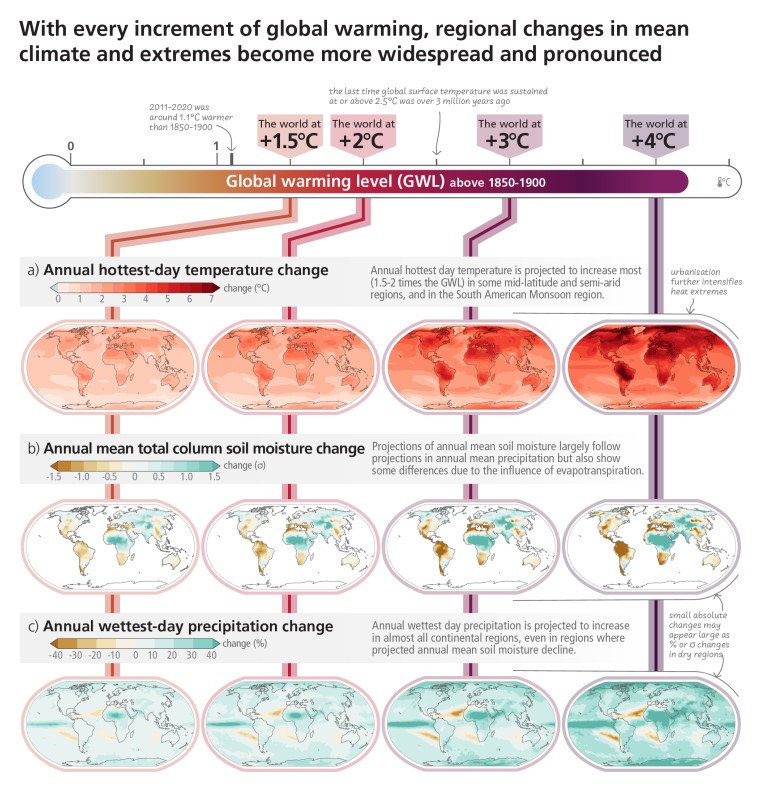
This has resulted in more frequent and more intense extreme weather events that have caused increasingly dangerous impacts on nature and people in every region of the world. Every increment of warming results in rapidly escalating hazards. More intense heatwaves, heavier rainfall and other weather extremes further increase risks for human health and ecosystems.
In every region, people are dying from extreme heat. Climate -driven food and water insecurity is expected to increase with increased warming. When the risks combine with other adverse events, such as pandemics or conflicts, they become even more difficult to manage.
“The report echoes the findings of all of the IPCC assessment reports since the 1990. Now with a much higher tone: the earlier theoretical risks have materialized. Climate change is already visible and its human, economic and social problems are growing,” Professor Petteri Taalas, World Meteorological Organization (WMO) Secretary-General said.
“This report shows that we are at the moment heading towards 2.2 to 3.5 degrees (Celsius) warming. Warming of three degrees would have dramatic impact on human health, the biosphere, food security and the global economy. Many of those risks could be avoided if we would stay within 1.5 degrees warming.
“WMO will publish its state of the global climate report in a few weeks, where we will show that all of the climate parameters are moving in totally the wrong direction: ocean warming, ocean acidification, melting of glaciers, sea level rise, flooding and drought events, and concentrations of carbon dioxide, methane and nitrous oxide.”
The other key IPCC message is that it much more rational to limit climate change as compared to inaction or to face its consequences. The good news is that we have both economically and technically attractive means to limit the warming level even to 1.5 degrees C, and the transition is also a great opportunity for new businesses and financial savings.
“In addition to climate change mitigation, we need to accelerate climate change adaptation. Early warning systems are a cost-effective and efficient adaptation tool and this is why WMO is prioritizing the Early Warnings for All by 2027,” Dr. Taalas said.
The IPCC report was approved during a week-long session in Interlaken, Switzerland. It brings into sharp focus the losses and damages we are already experiencing and will continue into the future, hitting the most vulnerable people and ecosystems especially hard. Taking the right action now could result in the transformational change essential for a sustainable, equitable world.