Ranchers must prepare for flooding: NDSU
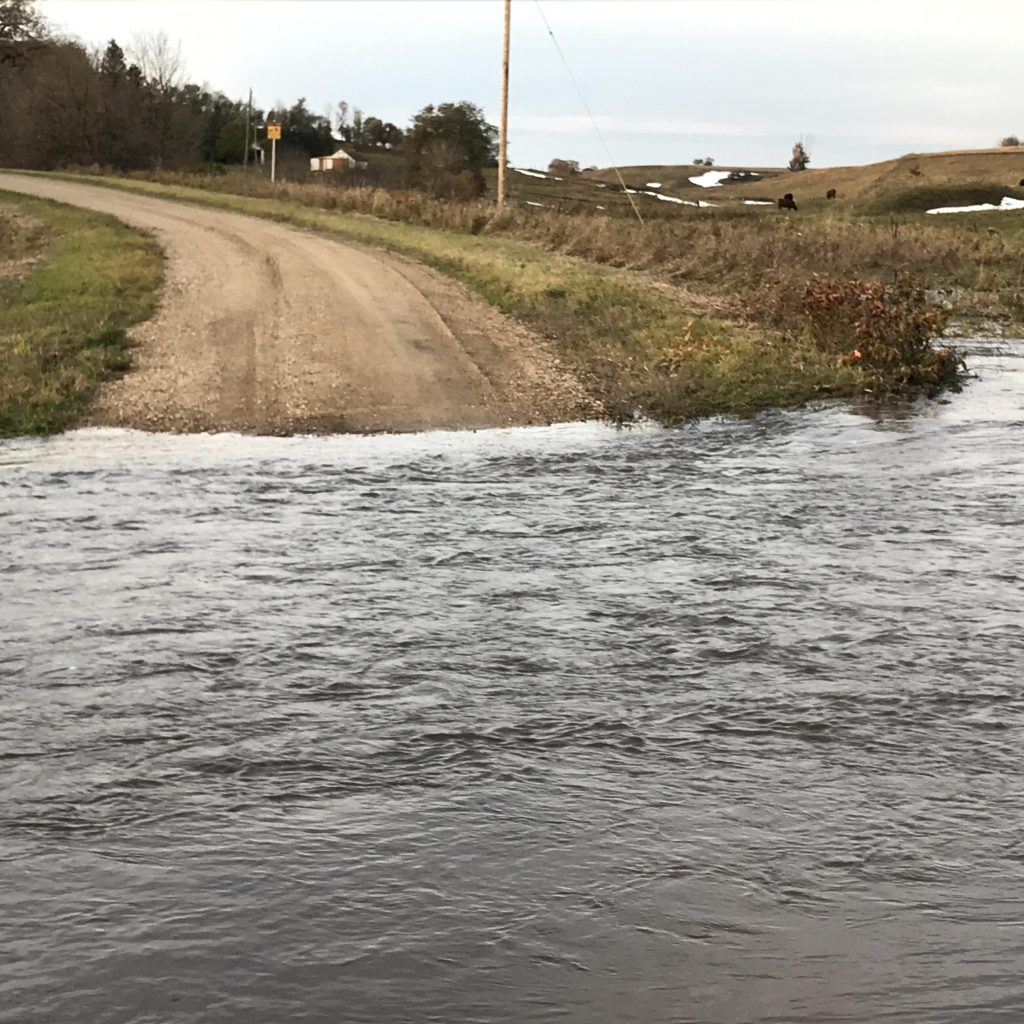
River or overland flooding can cut off access to feed and/or water sources for livestock. (NDSU photo)
North Dakota State University – With melting snow causing challenges for ranchers, North Dakota State University (NDSU) Extension specialists have advised them to move available feed to accessible locations and develop plans to assist livestock at risk of flood exposure.
The Red River Basin is at severe risk of flooding along rivers and overland flooding. Ranchers can take steps to ensure that livestock have safe housing and access to feed resources and clean water. Options may include safety in enclosed structures, higher pasture ground, evacuation to higher elevation, or relocation to local alternatives such as an auction barn or fairgrounds.
“Floodwaters can rise quickly, potentially cutting off access to feed and/or water sources for livestock,” warned Miranda Meehan, NDSU Extension livestock environmental stewardship specialist. “Beef cattle out on pasture are especially susceptible to displacement by flooding. Plans should be made ahead of a potential disaster, with consideration given to pens, loading facilities, transportation, evacuation routes and final destination of livestock.”
“Consider the location of barns used for livestock shelter,” said Zac Carlson, NDSU Extension beef specialist. “If a barn is located in a flood plain, like most old barns built close to water, then provide an escape route for the cattle to leave if an overnight flood occurs. Do not shut the barn door unless you check livestock every few hours.”
Floodwaters often prevent ranchers from reaching feed supplies, either directly or through damage to roads. Ranchers should ensure accessible storage facilities and an adequate supply of feedstuffs.
“Ranchers understand at-risk locations, and having a plan for high ground for both feedstuffs and animals is important,” said Travis Hoffman, NDSU Extension and University of Minnesota Extension sheep specialist. “Provide forage as possible, but plan for grain supplementation at or near the barn for calving, lambing or kidding to support energy needs during lactation.”
“Having feed supplies on hand is important because feed assistance may not be available during a flood,” said Karl Hoppe, NDSU Extension livestock systems specialist at the Carrington Research Extension Center. “Ranchers should pre-select sites on high ground for hay, emergency water supplies, and fencing supplies or panels.”
“Please consider that clean water can be a challenge,” Meehan explained. “Flood waters may be reservoirs for bacteria, viruses and parasites. Securing clean drinking water shortly after a flood event for rescued livestock assures adequate hydration and improved animal health. Make sure to test livestock water sources that may have become contaminated due to flooding to ensure sources are safe for livestock consumption.”
Wet feeds can be a safety or fire hazard, and moldy feeds can harm animals.
“Don’t feed moldy or spoiled feed, as molds in feeds can cause abortions or may be toxic,” said Dr. Gerald Stokka, NDSU Extension veterinarian and livestock stewardship specialist. “Contact your veterinarian or nutritionist for post-flood analysis of feed safety and quality. Diseases caused by spore-forming bacteria such as anthrax may be increased from the exposure of overland or river flooding. Consult your veterinarian post-flood if animal health concerns arise.”
Post-flood management should include a physical evaluation of animals for water-related injuries. Flood waters with current can cause stress and muscle weakness, and debris could cause bodily injury.
While not all areas will experience flooding, mud will likely be an issue on many farms and ranches this spring. There are few options once muddy conditions are in place, so preventive practices are key.
These recommendations can aid in reducing muddy conditions:
- Scrape lots to maintain a three to five per cent slope away from the feed bunk.
- Reshape mounds to ensure quick drainage.
- Move livestock to temporary feeding areas such as stockpiled pastures with adequate drainage or fields containing crop residue such as corn stalks.
“Ranches should evaluate their potential for flooding and plan accordingly,” Meehan said. “If you do not have access to higher ground, you may need to consider moving livestock off-site until the risk of flooding subsides.”