
Fossil CO2 emissions at record high in 2023
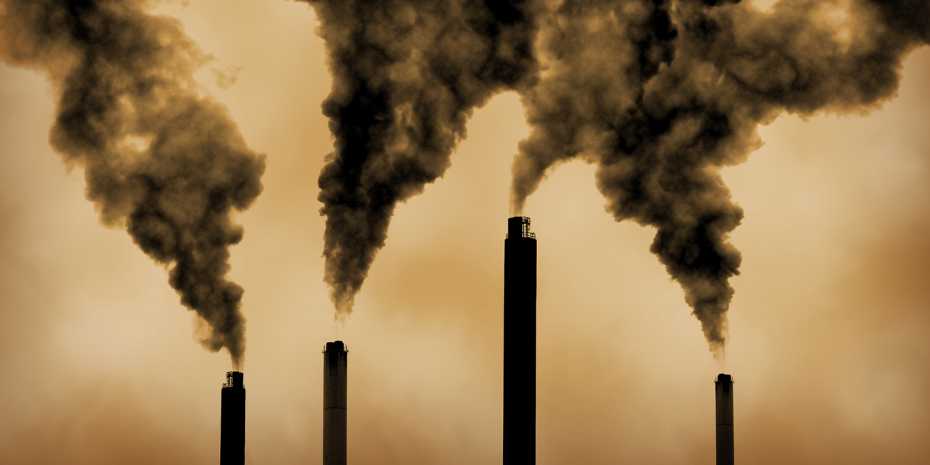
The world's five largest economies are driving climate warming particularly strongly with their greenhouse gas emissions. (Photograph: Colourbox.com)
Global Carbon Project – Global carbon emissions from fossil fuels rose to record levels in 2023, while there is not enough action taking place to rein in usage, according to new research from the Global Carbon Project science team.
The annual Global Carbon Budget projects fossil carbon dioxide (CO2) emissions of 36.8 billion tonnes in 2023, up 1.1 per cent from 2022. Fossil CO2 emissions were reportedly falling in some regions, including Europe and the United States, but rising overall – and the scientists said global action to cut fossil fuels is not happening fast enough to prevent dangerous climate change.
Emissions from land-use change (such as deforestation) are projected to decrease slightly but are still too high to be offset by current levels of reforestation and afforestation (new forests).
The report projects that total global CO2 emissions (fossil and land use change) will be 40.9 billion tonnes in 2023.
This is about the same as 2022 levels, and part of a 10-year “plateau” – far from the steep reduction in emissions that is urgently needed to meet global climate targets.
The research team included the University of Exeter, the University of East Anglia (UEA), CICERO Center for International Climate Research, Ludwig-Maximilian-University Munich and 90 other institutions around the world.
“The impacts of climate change are evident all around us, but action to reduce carbon emissions from fossil fuels remains painfully slow,” said Professor Pierre Friedlingstein, of Exeter’s Global Systems Institute, who led the study.
“It now looks inevitable we will overshoot the 1.5 degrees Celsius target of the Paris Agreement, and leaders meeting at COP28 will have to agree rapid cuts in fossil fuel emissions even to keep the 2°C target alive.”
While the latest CO2 data shows that current efforts are not profound or widespread enough to put global emissions on a downward trajectory towards Net Zero, “some trends in emissions are beginning to budge, showing climate policies can be effective,” said Professor Corinne Le Quéré, Royal Society Research Professor at UEA’s School of Environmental Sciences.
“Global emissions at today’s level are rapidly increasing the CO2 concentration in our atmosphere, causing additional climate change and increasingly serious and growing impacts,” said Le Quéré, adding “all countries need to decarbonise their economies faster than they are at present to avoid the worse impacts of climate change.”