Sea-level rise could affect freshwater availability
(EMB)
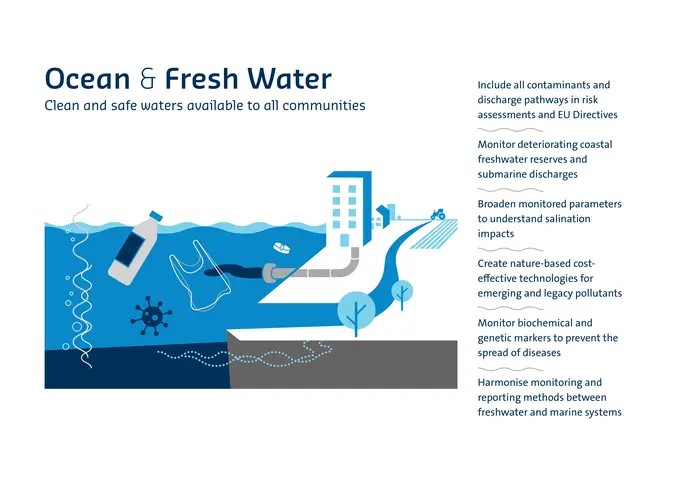
Royal Netherlands Institute for Sea Research (WeatherFarm) – A new publication by European Ocean scientists, “Navigating the Future VI (NFVI),” highlighted the lack of understanding of saltwater intrusion into coastal freshwater systems under current and future climate scenarios, and its impacts for coastal communities.
How much salt water is reaching those systems? Are climate change impacts such as higher sea levels, and warmer weather leading to increased use of underground freshwater reserves, making that intrusion more likely? NFVI made it clear that we can no longer consider and manage the oceans and fresh water separately. Water resilience has already been identified as a key focus for the new European Commission College of Commissioners, as they start their official hearings.
“We humans are heavily reliant on clean freshwater, but we still exert severe pressure on this crucial commodity. Global warming causes rising sea levels, which are pushing seawater further inland into rivers, wetlands and underground freshwater reserves, with negative effects on water quality,” said NFVI contributor Dr. Peter Kraal. “Moreover, human activities generate waste streams with cocktails of hazardous chemicals that enter the global water cycle, making their way from freshwater reservoirs to the Ocean. Freshwater and the ocean are intimately connected and affect each other; we need to understand how in order to sustainably use both components of the global water cycle.”
The publication provides governments, policymakers and funders with robust, independent scientific advice on future seas and ocean research. The NFVI highlighted key unanswered questions:
- To what extent is salt water from the ocean intruding into our terrestrial freshwater reserves?
- What dangerous microorganisms could climate change release into our water as we see more rainfall, and melting of ice and permafrost?
- What pathways are there for waterborne pollutants to reach the ocean and us?
- Can some pollutants extracted from wastewater be re-used?
- How do we design policies that can deal with new emerging pollutants and new knowledge about them?
The NFVI recommended a wider list of contaminants, developing an early-warning system for such, and support for collaborative research and science communication.