
Climate change may alter grassland water usage
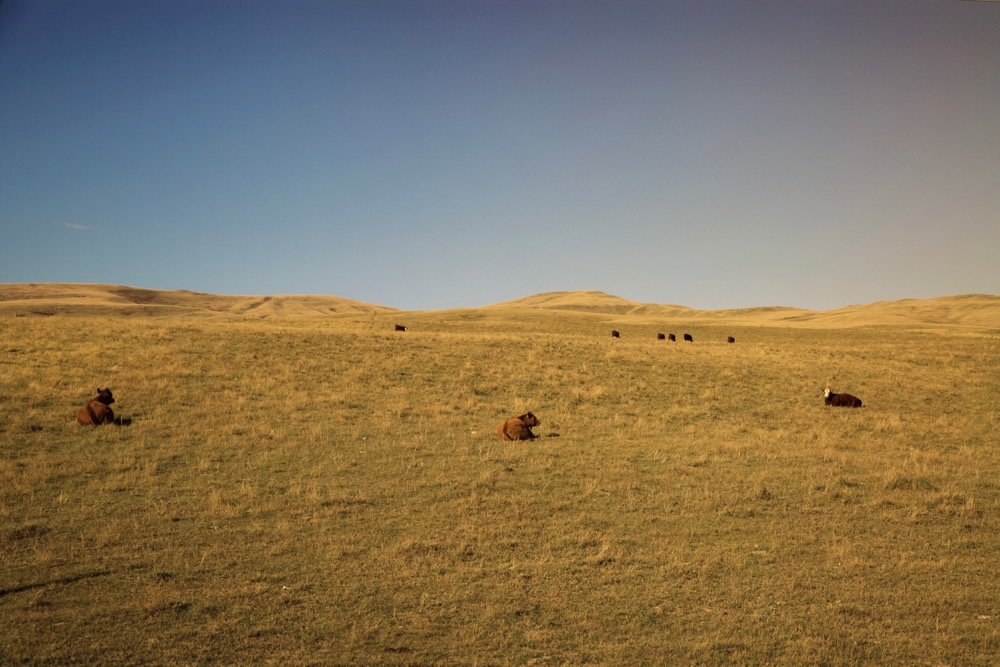
(Photo courtesy Canada Beef Inc.)
University of Maryland – Drought and increased temperatures in a carbon dioxide-rich climate can dramatically alter how grasslands use and move water, according to a new study published in the journal Science. The study provides an experimental demonstration of the potential impacts of climate change on water movement through grassland ecosystems.
“If we want to predict the effects of climate change on Earth’s water resources, we need data showing how the hydrologic cycle will respond at a small scale where we can define mechanisms, but that just hasn’t been available,” said the study’s lead author Jesse Radolinski, a post-doctoral research associate with the University of Maryland Department of Environmental Science and Technology who began the work at the University of Innsbruck in Austria.
Grassland ecosystems make up nearly 40 per cent of Earth’s land area, playing a critical role in the water cycle.
“Our experiments found that under summer drought conditions, and higher air temperatures that are expected under a future with elevated CO2, two things change fundamentally: One, the structural properties of the soil in the root zone change so that water flows differently than we expected, and two, these altered climate conditions and soil properties cause the plants to access water differently,” said Radolinski.
New rainfall typically tends to linger in the root zone where it mixes with existing soil water before filtering into local streams and rivers. Under future climate conditions the study suggests intense rainfall may move more quickly through the soil into local water bodies, interacting less with this stored water and potentially bringing nutrients and pollutants with it. Plants subjected to these future drought conditions may also conserve more water, releasing less back to the atmosphere through transpiration. That could mean less atmospheric cooling, triggering a feedback loop of more drought and more warming.
The study was conducted in open plots in an Austrian grassland. Six different climate conditions were simulated by manipulating air temperature and CO2 levels, and introducing recurring drought with large, automatically deployed shelters that prevented natural rainfall from reaching the plots. When they simulated rainfall, they used water with a traceable isotope of hydrogen called deuterium, and then tracked its path through the plants and the soil.
The results showed that after recurring droughts in plots with elevated CO2 and warming, the structure of pores in the soil changed so that older water could remain locked in smaller pores, while newer water flowed into larger pores that drained more quickly. As a result, soil and plant water interactions could be much more complex than previously thought, with significant consequences for the ability of ecosystems to withstand and recover from drought.