
Etreme heat, wildfires affect the globe
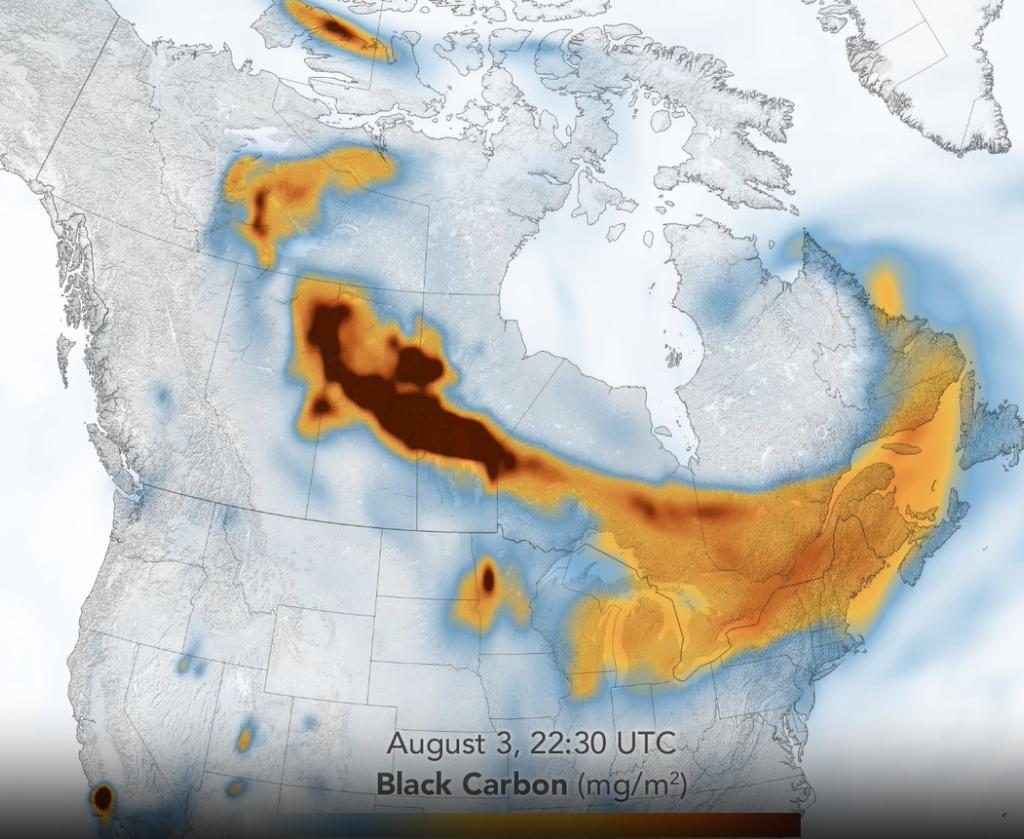
Widespread Smoke from Canadian Fires NASA Earth Observatory
World Meteorological Organization – Extreme heat, with dangerously high daytime and overnight temperatures, is impacting millions of people around the world, says the World Meteorological Organization, noting that wildfires and poor air quality are compounding the problem.
“Extreme heat is sometimes called the silent killer, but with today’s science, data and technologies, silence is no longer an excuse. Every single death from extreme heat is preventable,” said WMO Deputy Secretary-General Ko Barrett in a news releases.
Modelled estimates showed that between 2000 and 2019, approximately 489,000 heat-related deaths occurred each year, with 45 per cent of these in Asia and 36 per cent in Europe. Worldwide, the official diagnosis and reporting of heat-related illness, injuries and deaths are recognized to be under-reported.
In cities, the impact of heat on human health is more pronounced due to the urban heat island effect. Elderly people and those with chronic illness are at higher risk.
July 2025 was the third-warmest July globally (after July 2023 and 2024), according to the European Union’s Copernicus Climate Change Service. The average sea surface temperature was also the third highest on record. Arctic sea ice extent ranked joint second-lowest for July in the 47-year satellite record, virtually tied with 2012 and 2021.
The extreme heat has fuelled devastating wildfires, causing casualties and worsening air quality.
Smoke from hundreds of wildland fires burning in Canada created hazy skies and poor air quality across multiple provinces and northern United States in late July and early August 2025.
Canada is facing one of its worst fire seasons on record in terms of area burned. As of August 3, more than 6.6 million hectares had burned, according to the Canadian Interagency Forest Fire Centre. That exceeds the 25-year average of about 2.2 million hectares but trails the more than 12.3 million hectares burned by this date in 2023, a record-setting year.
For at least the second time this season, smoke from these blazes travelled across the Atlantic Ocean bound for Europe. Carried by a strong jet stream, it was expected to reach Western European skies between August 5 and 7. In mid-June 2025, another smoke plume from Canada degraded air quality and reddened skies in Central and Southern Europe.