Analyzing impact of wildfire heat on air pollution
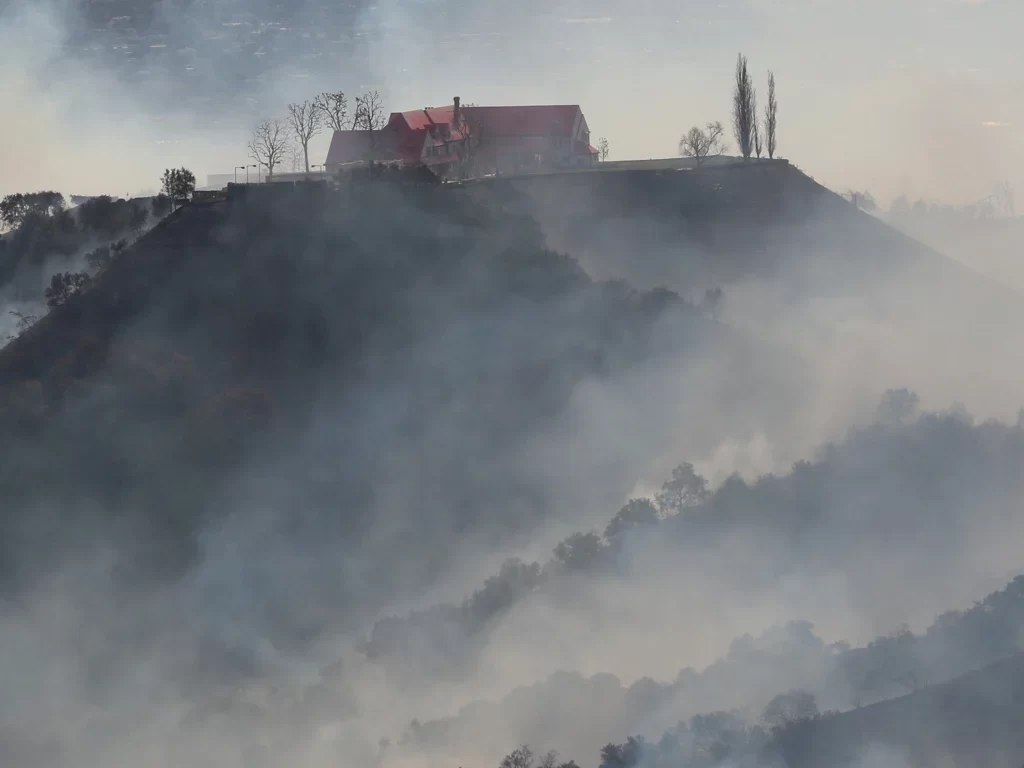
The Palisades wildfire in Los Angeles on 8 January 2025. Picture by Pierce/Adobe Stock.
American Association for the Advancement of Science – Wildfires in the western United States are worsening air quality in the west, but paradoxically may be improving it in the east, said a study published by the American Association for the Advancement of Science.
Often assumed to worsen when wildfire smoke drifts eastward from the west, fine particulate pollution (PM2.5) from wildfires has long been a major health concern in the eastern U.S., potentially contributing to thousands of premature deaths each year.
While this conventional wisdom has long informed air quality and fire management policies nationwide, the intense heat released by fires, which is capable of altering air temperatures, destabilizing the atmosphere, and driving strong convection, isn’t fully understood. Because wildfire heat can alter large-scale atmospheric circulation, its role in shaping distant air quality has been underappreciated. Most climate models consider only smoke emissions and not fire heat, which may explain why they tend to overestimate wildfire-driven pollution in the east.
Using observational data and climate model simulations that incorporate daily heat measurements, the study found that, during extreme wildfires in the west, PM2.5 actually declines in the east, not only during extreme events but also throughout the fire season. This occurs because the intense heat released by large fires drives strong convection, which changes weather patterns, suppresses eastward smoke transport, and promotes rainfall that helps cleanse the air.
However, while fire heat can improve air quality in the east, wildfires still worsen pollution in the west. By ignoring fire heat in current climate models leads to inflated nationwide health and economic impact estimates – by about 1,200 premature deaths and $3.3 billion in damages – highlighting the need for policies that recognize its role in shaping regional air quality and environmental equity.
“The differential impacts of wildfires necessitate the more appropriate allocation of resources and policy intensity for fire management and regional pollution control,” the study said. “With greening in a warming world, the accumulation of fuels will lead to increased fire heat release when wildfires occur. It is imperative to consider fire heat in the Earth system when conducting comprehensive climate simulations and wildfire risk assessments.”