
Nitrogen helps trees absorb carbon dioxide: study
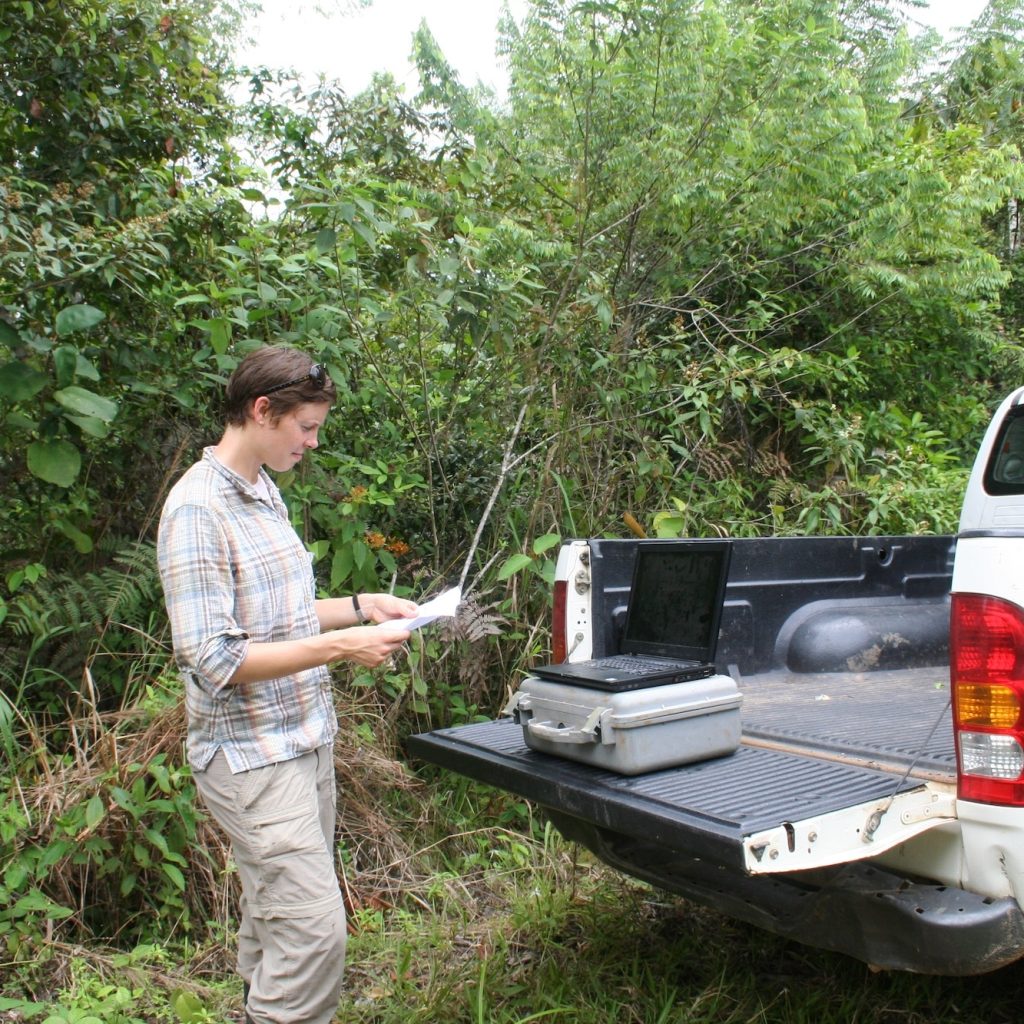
Cary Institute scientist Dr. Sarah Batterman uses a map to locate a plot in the 10-year-old forest behind her. The research team established 76 of these plots, which were 0.16 hectares in size. Some were fertilized by nitrogen, some by phosphorus, some by nitrogen and phosphorus together, and some with no fertilizer. The team tracked the growth and death of trees within the plots to test the effect of nutrients on forest carbon accumulation. Credit: Jefferson Hall
Cary Institute of Ecosystem Studies – More nitrogen in soils has been shown to aid tropical forests in absorbing carbon dioxide from the atmosphere, a new study found.
Scientists from the Cary Institute of Ecosystem Studies in Millbrook, N.Y. and other institutions looked at recovering tropical forests and estimated that they could absorb up to an additional 820 million tonnes of carbon dioxide per year for a decade if nitrogen levels in the soil were sufficient. The study was published in Nature Communications on Jan. 13.
“Nitrogen is limiting how quickly young forests can regrow,” said Cary Institute ecologist Sarah Batterman, senior author on the paper. “When we added nitrogen to the soil, forests grew back almost twice as fast in the first 10 years. Faster growth rates mean faster absorption of carbon dioxide, which can help to give us a few more years to reduce our carbon emissions.”
The scientists recommended planting nitrogen-fixing trees in regenerating forests and prioritizing forest restoration on lands that receive nitrogen pollution from farms and factories.
They also conducted an experiment beginning in 1997 with 76 hockey-sized plots of forests in Panama where the scientists added nitrogen, phosphorus, both or none to the trees.
Adding nitrogen caused the forest to regrow 95 per cent faster in recently abandoned agricultural fields and 48 per cent faster in forests that have been recovering for 10 years. There was no effect on forests recovering for 30 years or more. Adding phosphorus has no effect on the trees, regardless of age.
“It was pretty amazing to see,” said Batterman. “The plots with added nitrogen looked so much bigger than the ones where we didn’t add nitrogen — the trees were just huge. We were surprised how quickly the forest grew back and how strong the effect of nitrogen was.”