
Extreme weather marks the start of 2026
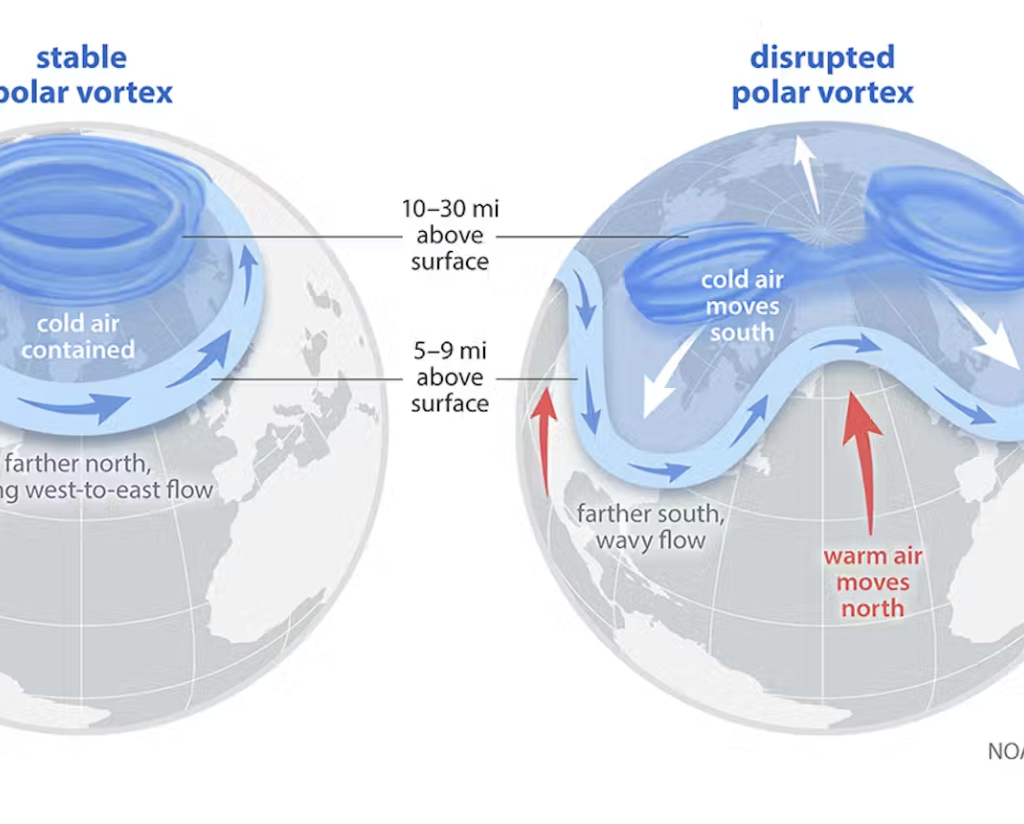
Credit: Prevention WEB/NOAA
World Meteorological Organization – A little bit more than a month into 2026, the Northern Hemisphere has seen extreme cold and in the Southern Hemisphere, extreme heat in some places and extreme rainfall in others.
- In the last week of January, a massive winter storm affected much of Canada and the United States, dropping widespread snow, sleet and freezing rain and bringing life-threatening cold and ice. Massive flight cancellations and power outages affected hundreds of thousands of households and there were a number of deaths.
- Russia’s Kamchatka Peninsula received more than two metres of snow in the first two weeks of January, following 3.7 m in December. Together, these totals make it one of the snowiest periods the peninsula has seen since the 1970s, according to Kamchatka’s Hydrometeorology Center. Petropavlovsk-Kamchatsky, the regional capital, came to a standstill, with reports of large snowdrifts burying cars and blocking access to buildings and infrastructure.
- In the northern Japanese prefecture of Aomori, the snow depth was a massive 1.7 m on Feb. 3 – the most in 40 years, according to the Japanese Meteorological Agency. The maximum snow-depth record at Aomori was 209 centimetres observed on Feb. 21, 1945 since its statistics started in 1893.
- Australia was gripped by two heatwaves in January, with dangerous fire weather conditions. The town of Ceduna in South Australia reached 49.5 degrees Celsius on Jan. 26 – a new record for that location, while other places around South Australia, north-west Victoria, inland New South Wales and south-west Queensland peaked above 45 C, according to the Bureau of Meteorology. The late January heatwave was the second to hit Australia in less than a month.
- In Chile, deadly wildfires burned across the Biobío and Ñuble regions, forcing tens of thousands to evacuate, destroying hundreds of structures and resulting in at least 21 fatalities. A state of catastrophe was declared as 75 separate fires spread under extreme heat and wind. In southern Argentina, high temperatures, prolonged drought and strong winds combined to fuel devastating fires in Patagonia.
- Late January flooding in Mozambique affected at least 650,000 people, displaced hundreds of thousands, and destroyed or damaged at least 30,000 homes, according to Mozambique’s National Disasters Management Institute. Crops were destroyed and livestock killed, and there is an elevated risk of cholera and other water-borne diseases, said the UN Office for the Coordination of Humanitarian Affairs.
- South Africa declared a national disaster on Jan. 18 over torrential rains and floods that have killed at least 30 people and washed away homes, roads and bridges in the country’s north.
- More than 50 people were killed in a landslide in West Java, Indonesia on Jan. 24. It was triggered by heavy rainfall but the area’s geography and unsustainable land-use practices were also culprits.
- In New Zealand, tropical storm systems brought record rainfall to the upper North Island, triggering flooding and landslides that caused casualties at a campsite.