
Strong grain shipments by rail offset freight losses in 2025
| 1 min read
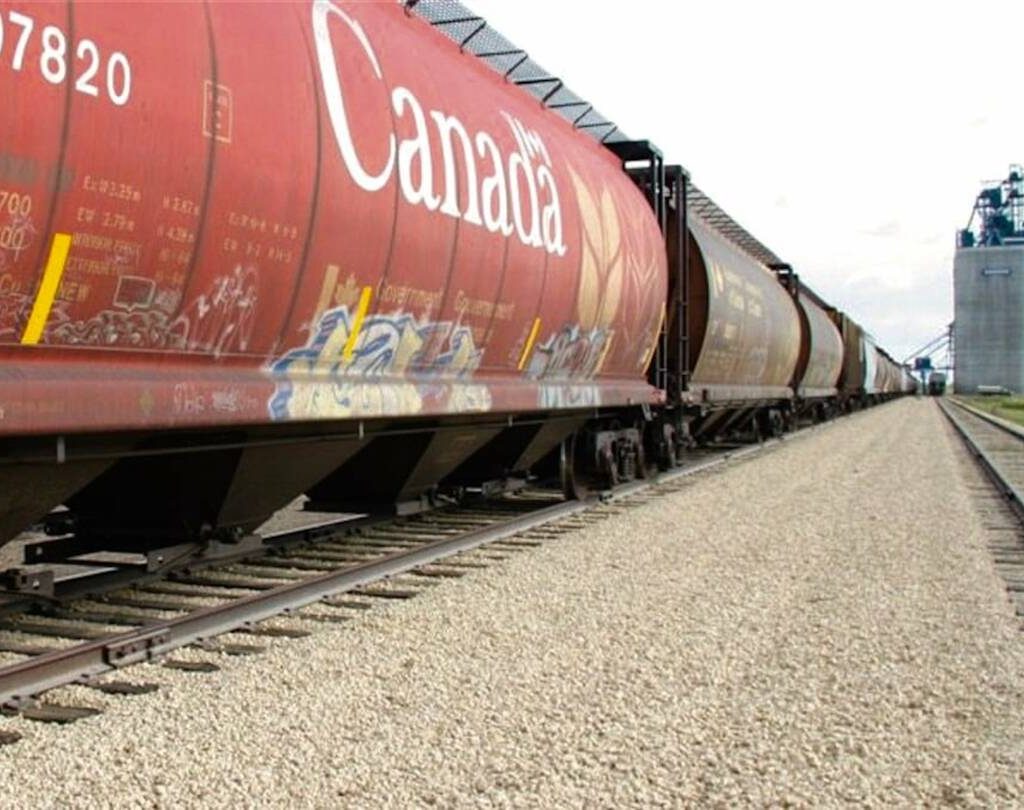
“A bumper 2025 harvest and strong global demand meant that grain shipments by rail remained strong throughout the year,” StatCan said. Photo: File
Strong cereals volumes — particularly wheat — helped offset sharp declines in freight received from U.S. rail connections in 2025, with total freight moved by rail in Canada during the year down only marginally from 2024, Statistics Canada reported on Feb. 24.
A record volume of intermodal traffic — mainly containers — also buoyed freight volumes.
Canadian railways moved 376.6 million tonnes of freight in 2025, down 0.2 per cent from 2024.
”A bumper 2025 harvest and strong global demand meant that grain shipments by rail remained strong throughout the year,” StatCan said.
- Carloadings of wheat increased by double digits, year-over-year each month from January to November, except for February.
- Annual carloadings of wheat rose by 14.3 per cent or 3.9 million tonnes to reach 31.1 million tonnes in 2025.
- Other cereal grains loadings also saw substantial growth in January — up 103.9 per cent — and September — up 72.7 per cent.
- Total loadings of cereals grew by 23.4 per cent to 7.8 million tonnes in 2025 — the largest increase since 2018.
- Carloadings of canola fell by 12.4 per cent to 8.8 million tonnes in 2025. StatCan attributed this to trade tensions with China.
- Freight loadings from U.S. rail connections saw significant double-digit year-over-year decreases for much of 2025.
- Annual tonnage fell by 13.3 per cent compared to 2024 at 39.3 million tonnes. That’s the lowest annual level since 2020.
- In 2023 and 2024, freight traffic from U.S. rail connections to Canada represented an average of 12 per cent of total rail tonnage per month. In 2025, the average share ranged by quarter between 10.0 per cent and 10.7 per cent.
- Loadings of fuel oils, crude petroleum and lumber fell sharply over the year. Coal shipments rose.