Saskatchewan secures future of native grasslands
The Saskatchewan Stock Growers Foundation is the first organization to offer term easements to protect grasslands
| 5 min read
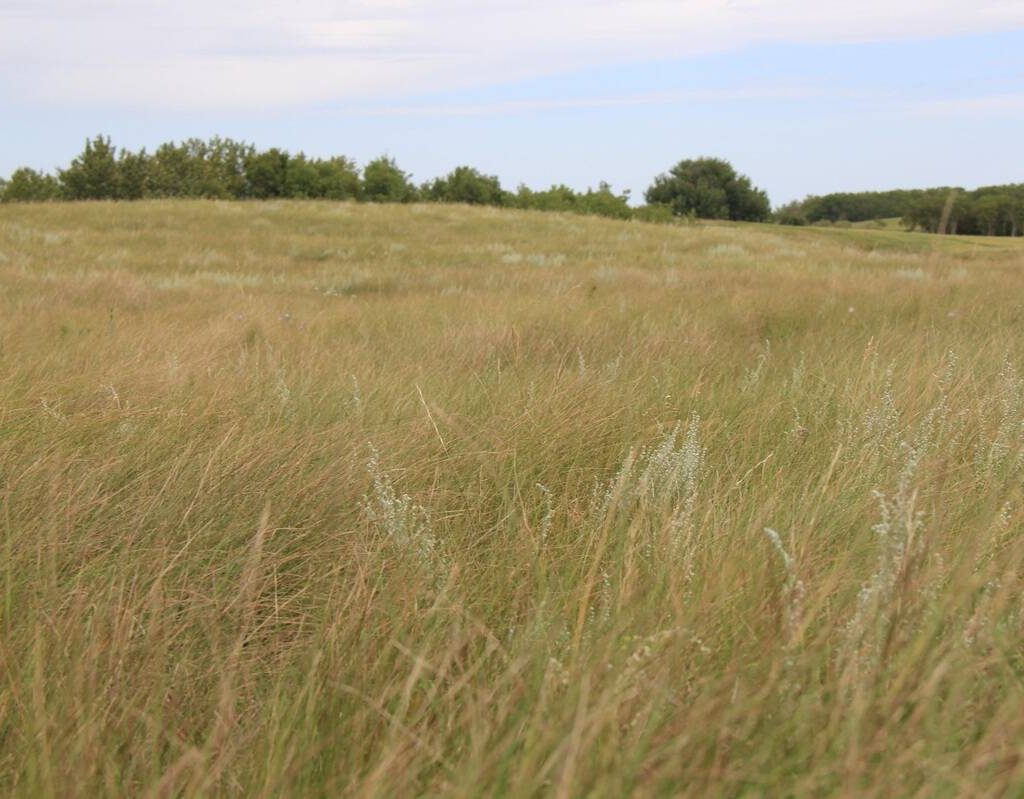
The Saskatchewan Stock Growers Foundation has completed two 25-year easements to protect grasslands in the province. Photo: Lisa Guenther
Glacier FarmMedia – The Saskatchewan Stock Growers Foundation has finally seen years of hard work come to fruition, as their first term easement was announced in June 2025, and a second has since been signed.
Now, they are working towards a bigger goal — getting more term easements signed in the province.
“What these term easements do is they really come in to protect (native grasslands) and incentivize keeping them protected,” said Mindy Hockley, assistant program manager with the foundation.
Native grasslands
The Saskatchewan Stock Growers Foundation was established in 2020 as a charitable foundation and land trust with the primary goal of preserving agricultural lands, advancing education, relieving poverty and assisting victims of disasters.
A priority of the foundation is preserving the province’s native grasslands.
Native grasslands are at risk in the province because of conversion for agriculture or urban development. Over 80 per cent of native grasslands have been lost in Saskatchewan.
It is estimated that the soils under native grasslands in Western Canada could contain up to 200 tonnes of carbon per hectare. Other benefits include wildlife habitat, water and nutrient cycling and enhanced biodiversity.
That’s where foundation’s term easements come into play.
“So through these easements, we’re able to work with the landowners who are stewarding these native grasslands and create a partnership and a collaboration to continue to build off that and keep these native grasslands on the land for years to come.”
Term versus perpetual easements
Before the foundation introduced its term easements, only perpetual easements were offered to producers, which means signing a piece of land into protection indefinitely. Depending on who grants the easement, this could mean many things, including what the stocking density can be, a pause on development and limitations regarding drainage and cultivation.
Deciding to enter into a perpetual easement is a consideration for any farmer, as it affects not just them but the next generation, as well.
This is where term easements can be a benefit. The grassland is still preserved, but it keeps the well-being of the operation and the next generation in mind.
“The reason why we wanted to pursue a term easement program was essentially because there was interest in easements to preserve grasslands, but we’re missing a little bit of flexibility in there,” Hockley said.
The term easements from the Saskatchewan Stock Growers Foundation are for a minimum of 25 years, with the option to make it longer. Then, after the agreed-upon time has passed, the landowner can decide whether they will sign the easement again.
“Once that term is up, the landowner has the option to renegotiate another easement or to walk away from it, and all the restrictions are lifted if they walk away. And then it’s also in combination with the fact that the landowners are getting paid to keep their native grasslands intact. So it’s an incentive to keep these range lands intact for the next generation.”
The financial incentive that goes along with the term easements is a one-time payment, and it is equal to the fair market value of the land under the easement.
“Each easement is entirely different compared to even their neighbours, so that percentage for their fair market value can fluctuate,” Hockley said.
If the producer decides to sign another term easement after their first easement is up, they will receive another payment.
First term easement signed
At the Saskatchewan Stock Growers Association’s annual general meeting and conference in Moose Jaw in June 2025, the foundation announced it had signed its first term easement.
The easement is for 25 years and was signed by Lloyd and Nyla Anderson. They will be protecting 640 acres of native grassland near Fir Mountain, Sask. They are guarding a necessary habitat for species at risk, such as the greater sage grouse and swift fox, while also allowing for flexible and working use of the land.
“The landowners that we’re working with were very motivated to keep their range lands and grasslands intact, and when we were talking with them in the initial stages about signing this easement and potentially being one of our first easements in this entire process, they were excited,” Hockley said.
Kelsey Elford, Saskatchewan Stock Growers Foundation chair, said in a release that signing the easement reflects the foundation’s commitment to conservation and innovation, and that it is “ensuring ranching and conservation thrive hand in hand.”
Now with the easement signed, the foundation will continue to stay in touch with the Andersons to support them, make sure there are no concerns and address any issues.
Future
With their first term easement officially signed and in effect, the foundation wants to get more term easements underway. They’ve also signed their second easement, but their waitlist is extensive — more than they can currently support due to funding.
“We have multiple landowners interested, and right now that interest is outweighing our funding capacity, so we’re actively looking for more funding to be able to continue to do this,” Hockley said.
Because their easements are term and not perpetual, funding that is available to perpetual easements, such as the Ecological Gifts Program from the federal government, is not accessible to the foundation.
Hockley said they are working towards being recognized by that program, though, as well as securing other funding.
For now, their focus is on term easements. The process is not quick — but that’s not a bad thing.
“It’s a longer process. It is tied to land title, so there are some legalities involved in it. We want to make sure that we are not rushing anything, and that the landowners are well aware of the implications and what this is potentially going to look like in the future,” Hockley said.
“Our goal is to keep those grasslands intact. We want to do it right.”
– This article was originally published in the November 2025 issue of Canadian Cattlemen.