
Australian farmers shift to less fertilizer-intensive crops as Iran war costs surge
| 2 min read
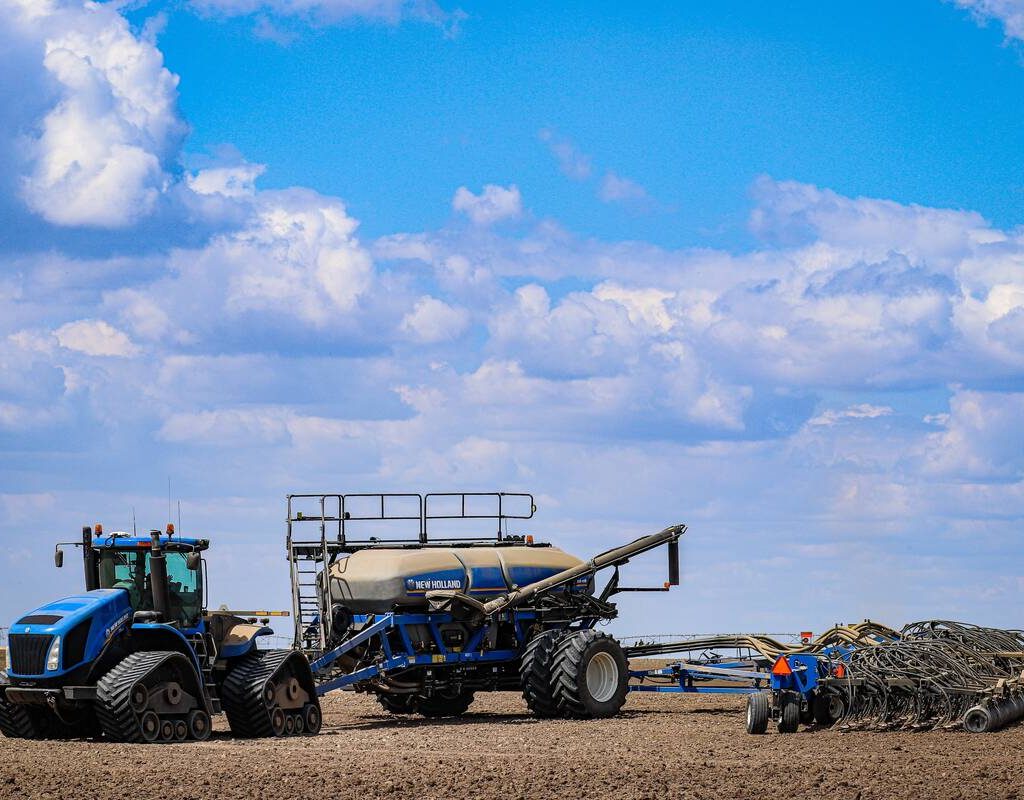
Planting of wheat, canola and other crops is set to gather pace this month across much of Australia and farmers need ample supplies of crop nutrients to support early growth. Photo: Sonia Third
Singapore | Reuters — Australian farmers are expected to favour less nitrogen-intensive crops such as barley over wheat and canola in the upcoming season, as surging fertilizer and fuel costs driven by the Iran war weigh on planting decisions in one of the world’s top food exporters.
Planting of wheat, canola and other crops is set to gather pace this month across much of Australia and farmers need ample supplies of crop nutrients to support early growth.
The price of urea in Australia was quoted around A$1,350 (C$1,298) per ton this week, up about 60 per cent since the beginning of the U.S.-Israeli war with Iran, analysts said. Australian diesel prices are up 88 per cent over the same period.
“Farmers are trying to reduce fertilizer application and switching planting from nitrogen hungry crops like wheat and canola into feed barley,” said Dennis Voznesenski, an agricultural analyst at Commonwealth Bank of Australia.
“Some are also reducing planted area, but this so far is minimal,” he said.
Australia’s wheat planting could drop by 10 per cent to 12 per cent given the current conditions, from 12.4 million hectares a year ago, an agricultural broker and an analyst said. Cultivation of canola is also likely to decline despite higher returns, they said. Both declined to be named.
Australia is the world’s fourth-largest wheat exporter and No. 2 supplier of canola, selling to importers across Asia, the Middle East and Europe. It also sells crops such as barley, chickpeas and pulses.
Straight of Hormuz is fertilizer choke point
Farmers worldwide are struggling to secure fertilizer supplies as planting season in key countries gets underway, with the Strait of Hormuz, which carries 30 per cent of globally traded fertilizers, severely disrupted by the Iran war.
Bank of America warned that the conflict threatens 65 per cent to 70 per cent of global supplies of urea, a key nitrogen fertilizer, with prices already up 30 per cent to 40 per cent.
U.S. farmers plan to plant less corn and more soybeans in 2026 than last year, the U.S. Department of Agriculture said this week. China has curbed fertilizer exports, while India is tapping alternative sources to boost supplies for summer-sown crops.
Corn, wheat and canola usually require higher application of urea than barley and pulses.
“Australia typically relies on China for urea, but export curbs have limited shipments,” said StoneX analyst Josh Linville.
“Buyers turned to Indonesia, only to face further constraints there and by the time they sought supplies from the Middle East, the war had already started and the Strait of Hormuz had closed.”
Crops need fertilizer at the start of planting as well as in development and pre-maturity stages. Crops planted in April and May are harvested in November and December.
“It is a big issue as the cost of farming has risen sharply in the last one month,” said Tobin Gorey, founder of commodities consultancy Cornucopia in Sydney.