Bring focused approach to target systems, not producers says animal activist
| 3 min read
To be successful in their advocacy, animal welfare activists should target broader systems, not individual producers an advocacy expert says.
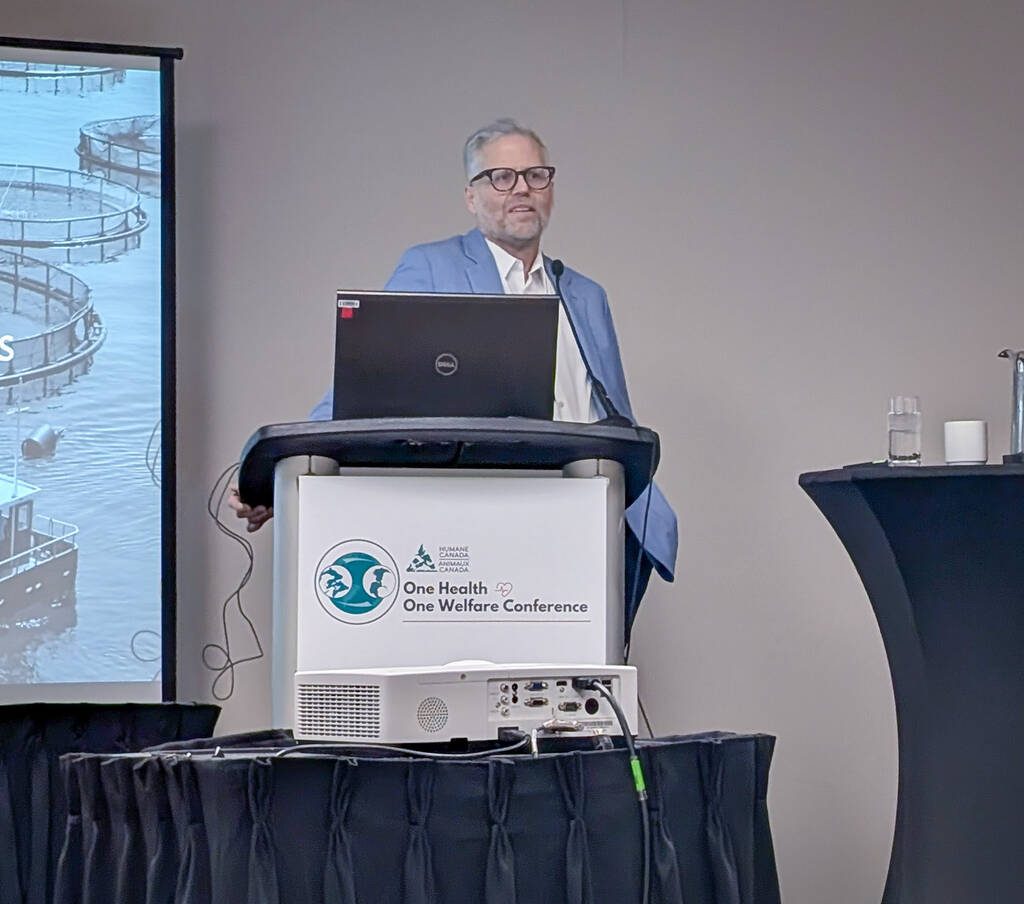
Darren Vanstone, an animal welfare advocate and managing director of Ocatra, spoke at the Humane Canada One Health One Welfare Conference in Ottawa.
He said animal agriculture should be approached as what it is — a complex system of individuals and businesses. Not everything can be easily changed.
Clear direction needed
Vanstone said activists must have a clear, simple message to get through to people and businesses. Without a specific ask, efforts can sometimes backfire.
For example, in 2002, Humane World for Animals, or HSUS had a campaign that led to sow stalls being banned in Florida in 2008 — the first such ban in the U.S.
“They needed to have a very simple ask, right? They chose group housing. But they actually didn’t provide any other direction around that.”
Without clear direction, the advocacy resulted in change but ended up making some aspects of animal welfare worse.
“We said, ‘get them into group housing.’ They got them into group housing,” Vanstone said. “And the current standard operating procedures is …16 square feet, right? So, two extra square feet for animals that were already too big.”
“They also don’t have the protection of the bars now, and they don’t have any enrichments and they are all hungry because we’re not feeding them and when we are, we’re feeding them liquid.”
“So theoretically, what we’ve done is actually made that a lot worse.”
The campaign was effective in pushing for change, Vanstone said in a later email conversation, however “the early adopters are either going to lose their market (for example, to Prop 12-compliant producers) or be forced to undergo additional renovations to barns they reworked less than 10 years ago.”
Proposition 12, or Prop 12, is a 2018 California ballot initiative that mandates meat and eggs sold in California must come from animals raised in compliance with the state’s welfare regulations, which affect space allotments for sows. It mandates that sows much have at least 24 square feet of space.
Incremental change
Vanstone said advocates may need to accept that the system may never be perfect in their eyes. Producing enough food for a country the size of Canada while maintaining significant exports could make inevitable some degree of danger, environmental damage and animal harm.
“I would say that ultimately, the decisions that we make, the cost and benefits, we just need to figure out that we’re distributing those equally,” he said.
He suggested focusing on changing one thing at a time rather than looking for a “silver bullet.”
“There will be a lot of times that you will realize that you’ve not picked the right spot, and then you can go back and redo it,” Vanstone said. “Really complex systems like the food system are dynamic, and they learn and they change. So, what you do now may not work again later.”
“When we’re talking about changing things at the structure, at the core, where things actually happen, a single, small change in there will have massive impact.”
One of the best ways to drive change is to address problems at their root and understand which players don’t have as much skin in the game. If advocates can find a root cause of multiple impacts, they don’t have to worry about the technical issues.
“You let the technical people solve the technical parts. This is where you set long-term goals and ambitions, and you do it across a broad stakeholder group.”