Canola growers seek tariff compensation
A recent study determined that losses were $2 to $4 billion in 2025-26
By Sean Pratt
| 4 min read
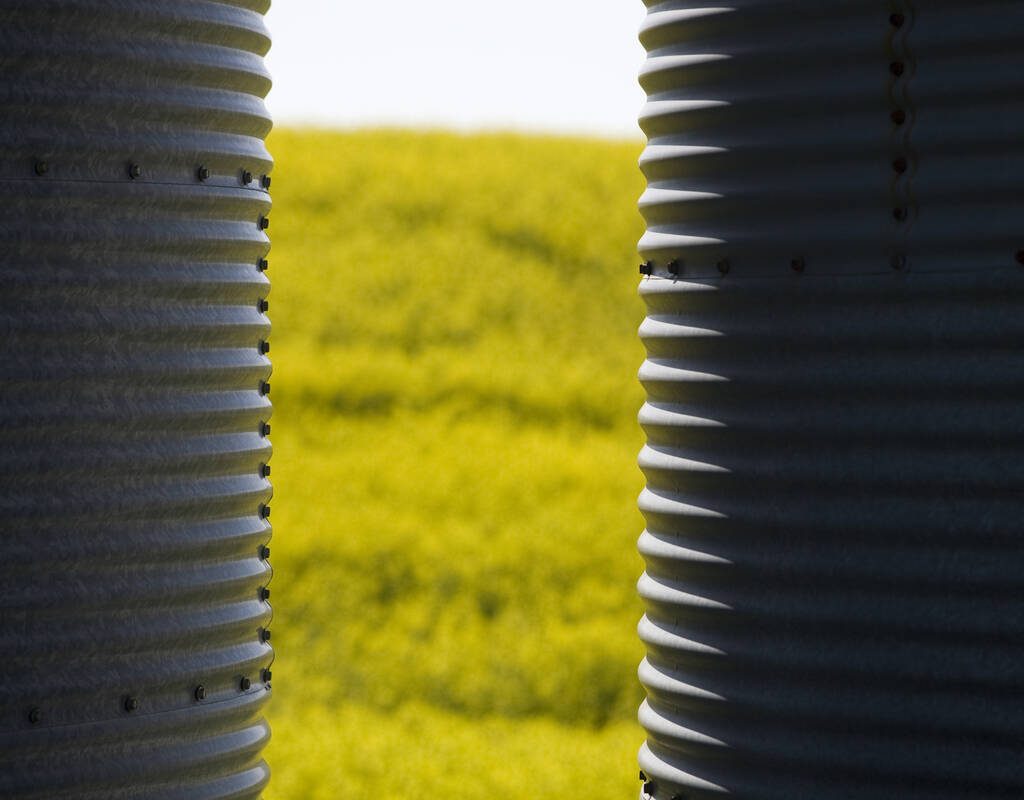
The Alberta Canola Producers Commission polled 105 growers, with 72 per cent agreeing the Feds should provide compensation. Photo: Getty Images Plus
Canada’s canola growers are happy to see the Chinese market reopening, but intend to seek compensation from Ottawa for the time it was closed.
The Canadian Canola Growers Association commissioned a study by LeftField Commodity Research that determined losses amounted to somewhere between $2 billion and $4 billion in 2025-26.
Trade with China ground to a halt in 2025 due to China’s prohibitive tariffs on canola seed, oil and meal, which were a direct response to Canada’s tariffs on Chinese electric vehicles, steel and aluminum.
“We need compensation for the damages,” Alberta Canola chair Andre Harpe said during a recent webinar.
“To me, there’s no question about that.”
WHY IT MATTERS: Canola is the biggest cash crop for Canadian farmers
He made those comments one day before Canada announced an agreement-in-principle with China that would see tariffs on canola seed fall to 15 per cent as of March 1, 2026, down from 84 per cent today and the 100 per cent tariff on meal eliminated as of the same date.
Harpe was asked if the tariff agreement with China changes anything.
“At the end of the day, the plan is still to continue talking to Ottawa about the compensation for damages done to canola growers,” he said.
The Alberta Canola Producers Commission polled 105 growers at four recent grower engagement meetings, and 72 per cent of them agreed that the federal government should compensate growers, while 12 per cent disagreed and 14 per cent were unsure.
Harpe, who is also chair of Alberta Canola, said they need to come up with a more precise total damage number now that they know when the tariffs are being phased out and by how much.
‘On a park bench with two elephants’
During the webinar, the panellists were asked if an EV deal with China will lead to retaliation from the United States.
Brittany Wood, senior manager of transportation and trade policy with the CCGA, said she wouldn’t rule it out.
“I don’t think we live in a time right now where we can say there is no risk,” she said.
Harpe agreed.
“It’s like we’re sitting on a park bench with two elephants. If one wiggles a little bit, we’re right into the other one,” he said.
Harpe is tired of being pushed around. In September, he told Prime Minister Mark Carney that he estimates canola prices dropped by about $1.25 per bushel following the trade spat with China, a number he confirmed with two different traders of the crop.
China bought $4.9 billion of Canadian canola seed, oil and meal in 2024, ranking second behind the $7.7 billion purchased by the United States. Japan took third spot at $720 million.
Seed accounts for the vast majority of China’s annual purchases, while oil is the commodity of choice for the U.S.
Wood said no Canadian canola moved to China in September and October, the latest months where there is available export data.
Combined sales to other countries totalled slightly more than 600,000 tonnes in October, or about half of last year’s levels for that month. That is the worst October number in 20 years.
Domestic consumption needed
Harpe said the China debacle has reinforced the sentiment that Canada needs to start consuming more canola domestically.
“The easy answer is to use it as biofuel feedstock,” he said.
To that end, Harpe has met with Alberta premier Danielle Smith, lobbying for an increase in the province’s biobased diesel mandate to five per cent from the existing two per cent.
“It’s a simple ask,” he said.
And one that wouldn’t cost much. Alberta Canola estimates the three-percentage point increase would cost drivers an extra 1.5 to two cents per litre at the pump, which is basically a typical overnight fluctuation.
Will Holowaychuk, policy analyst with Alberta Canola, said Imperial Oil’s new renewable diesel plant in Strathcona, Alta., will produce one billion litres of the fuel per year when it is running at full capacity.
It will require about one million tonnes of canola oil, or about 2.5 million tonnes of seed, once it is running at capacity.
“One dedicated biofuel refining facility is able to eat up approximately 40 per cent of the canola that is produced in this province,” he said.
On a national level, Wood noted that the federal government’s recently announced Biofuel Production Incentive is now in place.
It is a short-term subsidy program that will run for 2026 and 2027.
Perhaps the more important federal initiative is the targeted amendments to Canada’s Clean Fuel Regulations announced in the latest federal budget.
Consultations are underway with Environment Canada on what those amendments will look like.
The CCGA is pushing for amendments that will make Canadian canola more competitive with imported feedstocks.