
China’s Q1 pork output up 4.2 per cent from a year earlier, lags expectations
By daphne Zhang Lewis Jackson Reuters
| 1 min read
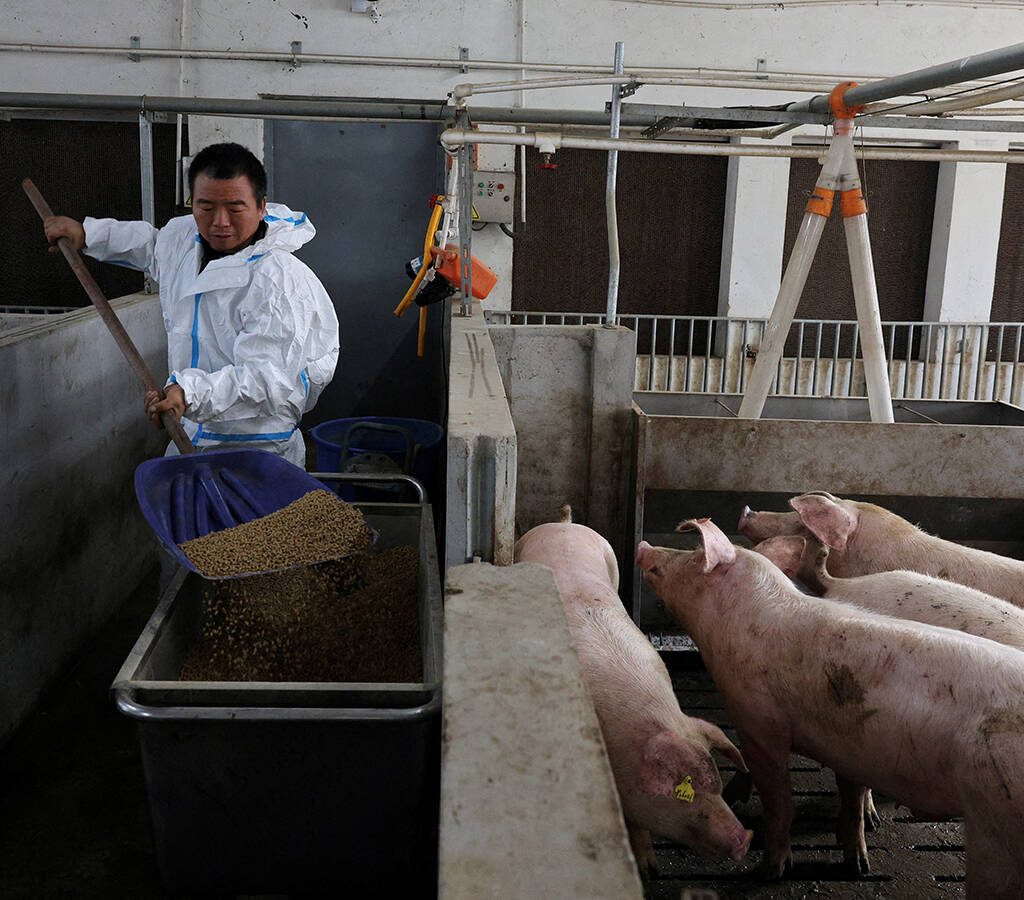
Farm manager Gao Qinshan feeds pigs in a pig pen at a farm in Taizhou, Jiangsu province, China January 15, 2026. Output from January through March in the world’s largest pork-producing country surged to 16.69 million metric tons, data from the National Bureau of Statistics (NBS) showed. Photo: REUTERS/Go Nakamura/File Photo
China’s pork production rose 4.2 per cent in the first quarter of 2026 from a year earlier, government data showed on Thursday, as hog producers accelerated slaughtering to address a supply glut.
Output from January through March in the world’s largest pork-producing country surged to 16.69 million metric tons, data from the National Bureau of Statistics (NBS) showed.
“Pig capacity reduction has been lower than expected,” said Rosa Wang, an analyst from Shanghai JC Intelligence. “Consumption is weak, so hog prices can’t rise.”
WHY IT MATTERS: China has been a key market for the Canadian hog sector, however that country has imposed a 25 per cent tariff on Canadian pork imports, which hasn’t budged despite improved relations between the countries.
Cash hog prices hovered around 8.7 yuan (C$1.75) per kg this week, falling from 14.9 yuan per kg a year earlier, according to data from MySteel, a consultancy.
Chinese farmers slaughtered 200.26 million hogs in the first quarter of 2026, up 2.8 per cent from a year earlier, according to the NBS data.
“Even though they’re reducing herd size, the pace of that reduction is still fairly modest, but output is growing quite quickly – this shows productivity really is rising very fast,” said Pan Chenjun, senior animal protein analyst at Rabobank in Hong Kong.
“Pork prices may pick up in the third quarter this year. Right now, the oversupply situation is still very serious.”
Home to half the world’s pigs, China’s massive hog sector is struggling with industry overcapacity and weak consumer demand.
Authorities have intensified efforts to rein in overcapacity, urging major firms to reduce breeding sows, keep hog weight to around 120 kg and tighten credits and subsidies.