New strategies needed for Canadian agriculture to stand out in global trade
| 5 min read

(Left to right) Jeff Mahon, Greg MacDonald and Edwini Kessie speak on a panel at the Canadian Crops Convention in Toronto on March 12. Photo: Jonah Grignon
Canada may need new strategies to stand out as issues like tariffs, conflict in the Middle East and loss of faith in the World Trade Organization changing the face of global trade.
After a year marked with volatility, trade disputes and continued erosion of faith in rules based trade, panelists at the Canadian Crops Conference, held in Toronto in March, explained challenges in the international trade order and what Canada can do to improve its standing.
How can Canada stand out in a globalized market?
“The rest of the world, the rest of the sectors of the global economy, are finally getting to know what it felt like to be agriculture for a number of years,” said Jeff Mahon, director of StrategyCorp.
He pointed to non-tariff barriers and the weaponization of trade.
Canada has sought to overcome challenges through diversification, but Mahon said this may not be as easy as some are making it out to be.
“This whole movement is driven by, you know, roughly 75 per cent of our exports going to the United States. But the last I checked, Canadian agriculture is already pretty diversified,” he said.
“Telling Canadian agriculture it needs to diversify further is like telling a cayenne pepper it needs to be spicy.”
The questions are — how Canada can grow its market share and how reliant Canada should be on bigger markets like China and India. Mahon said it will be important to recognize there may not be alternatives to those markets and Canada will likely need to continue trading in both.
Win-win thinking
In a global market currently favouring buyers, Mahon said Canada may need to find new strategies to stand out.
“In some cases, that might mean selling more processed or value-added goods,” He said. “In other cases, particularly when we’re looking at new markets in developing countries, we might want to think about bringing a bigger Canadian value proposition to them,” he said.
For example, instead of just offering commodities, Canaa can offer access to a network of capability and research.
This is already happening — for example, Prime Minister Mark Carney’s recent trip to India saw the promise of a Canada-India pulse research centre.
“Telling Canadian agriculture it needs to diversify further is like telling a cayenne pepper it needs to be spicy.”
Jeff Mahon
“Now you’re using empathy,” Mahon said. “You’re going to a developing country, India, and you’re saying, ‘what do you need from us?’”
In a country like India, where nutritional security is a concern, Mahon said this type of win-win-thinking could be part of Canada’s strength as a partner.
He added that he’d heard a former Indonesian ambassador suggest Canada could help countries build processing capacity, leading to “mandatory supply chains” with Canadian exports at the centre.
Mahon said he would like to see governments rephrase requests to industry to diversify and rather ask what the industry needs to grow market share.
“Diversification and growing exports isn’t going to work unless Canada fixes some of the supply side problems,” he said.
These may not be entirely an industry issue.
“The government might want to look in the mirror a little bit more if it wants to be able to figure out how to help grow agricultural exports.”
Barriers within international trade
One barrier for Canadian agri-food trade in the EU has been the challenge of adapting to regulatory frameworks. The effects of European policies, like the Green Deal, Farm to Fork strategy, can sometimes be felt in Canada.
For example, The European Commission has proposed a bill that would effectively set pesticide tolerances at zero on imported grains, oilseeds, pulses and other agricultural commodities if those pesticides haven’t been approved for use in the EU.
The EU isn’t a primary destination for Canadian grain, oilseeds and pulses, but exports can be significant some years.
European politicians have argued that this levels the playing field so growers outside of Europe don’t have a competative advantage.
The Canadian government is lobbying for predictability said Greg MacDonald, a counsellor with the Mission of Canada to the EU.
Prime Minister Mark Carney is seen as a close friend in many countries, and now the government is attempting to leverage that, MacDonald said.
People shouldn’t think the EU is “closed for business on agriculture trade,” he added.
MacDonald suggested Canada could continue to work with the EU on regulatory alignment.
“How do we make the regulatory frameworks work for Canada with the broad political overview we have that we’re the trusted and reliable partner, and the EU calls us and asks, how can Canada provide product X?”
A loss of faith in rules-based trade
The past year has also seen attacks on the role of rules-based trade.
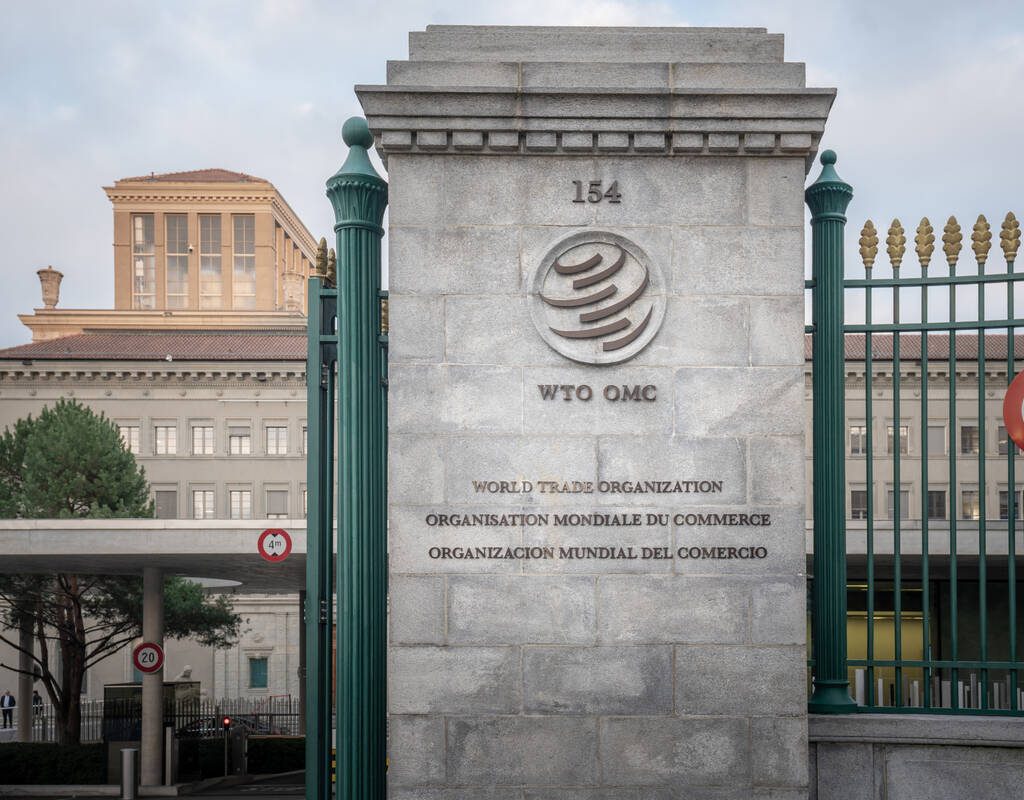
Edwini Kessie, director of the agriculture and commodities division at the World Trade Organization (WTO) said he felt the core principles of his organization are “under attack.”
He said the non-discrimination principle and the security and predictability of market access have come into question for some.
“These have been the binding core principles of the WTO, but I think increasingly there are questions as to the effectiveness of the WTO rules in creating a level playing field,” Kessie said.
“We see in the EU specifically, regulatory and policy developments that may be shifting away from some core tenants of WTO rules, which adds to uncertainty in the grains and oilseeds trade,” MacDonald said.
Kessie said the solution is not for the global trade system to turn its back on the existing rules and encouraged stakeholders not to give up on the WTO.
“There are changes which have to be made,” he said. “And I do hope that the WTO members will come together and effect the real changes, which will strengthen the rules-based multilateral trading system.”
“The current prosperity that we are witnessing the world is because of the rules-based system,” he said, “so we need to strengthen it.”
WTO ministerial talks in Yaounde, Camaroon at the end of March struggled to make headway on questions of reform and ultimately broke down after the group could not agree on renewing a moratorium on duties for electronic transmissions like digital streaming.