
Pulse Weekly: StatCan projects fewer pea and lentil acres
| 2 min read
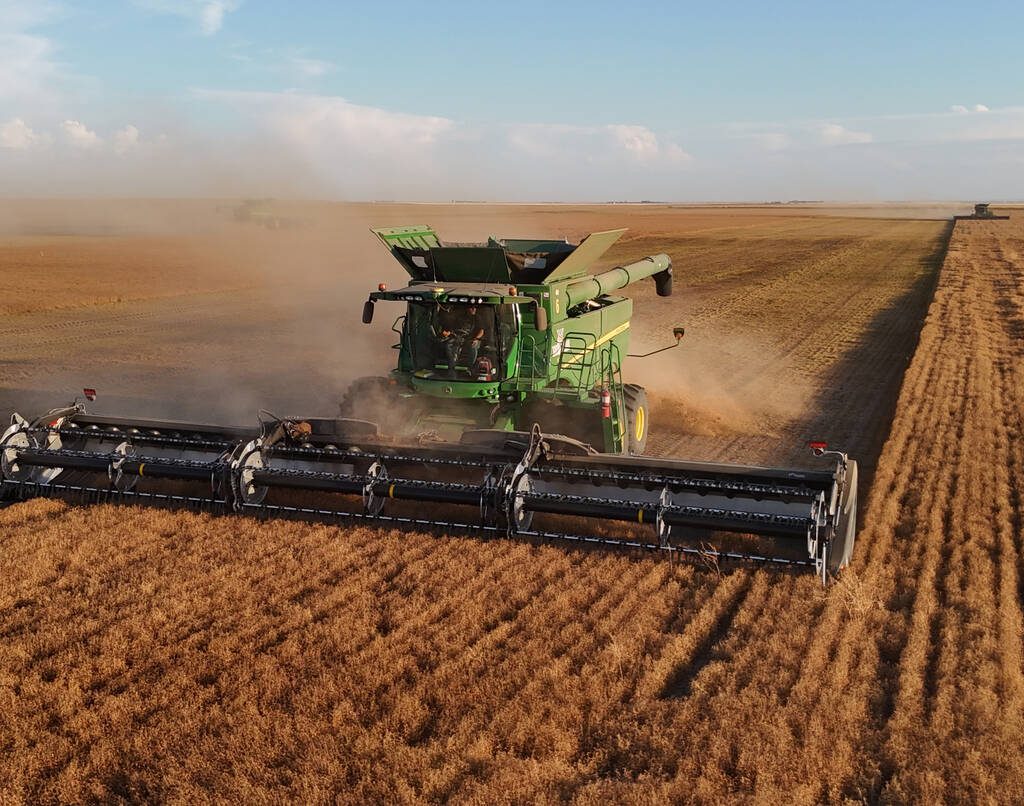
Photo: Joseph Kingdon
Glacier FarmMedia – There will be fewer pulse acres seeded in Canada this spring if Statistics Canada’s latest figures, released March 5, are realized.
Marlene Boersch of Mercantile Consulting Venture Inc. in Winnipeg said large carryouts and lower prices over the past year will likely mean fewer pulse acres this spring.
“Like for all commodities, prices are down quite a bit. So your return-per-acre calculation will change very significantly,” Boersch said. “On top of that, for both lentils and peas, you will have some very significant carryout.”
Seeded lentil acres were estimated at 4.138 million tonnes, down 5.5 per cent from last year. The total would be the least amount of acres in three years and the second-least since 2020. One reason for the decline would be the 2025-26 carryout of 1.695 million tonnes, more than three times larger than the previous year’s.
Dry pea acres were also set to be lower, dropping by 12.3 per cent at 3.078 million acres. The figure was also the lowest in three years and the second-lowest since 2012. Dry pea plantings will decline in all three Prairie provinces, most notably Saskatchewan where it will lose 16.6 per cent for a total of 1.479 million. The 2025-26 carryout for dry peas was 1.31 million tonnes, nearly triple from the previous year.
The amount of edible bean acres is projected to decline by 30.7 per cent at 295,000 acres, the smallest total since 2015 and one year after the biggest edible bean crop since 2020. Manitoba’s seeded area was estimated at 120,000 tonnes this year, down 44.7 per cent from 2025.
StatCan estimated faba beans acres this spring to total 55,900, 18.8 per cent lower than in 2025 and the fewest acres since 2016. It would also mark the fourth straight time faba bean acres in Canada declined year-by-year.
Chickpeas were the only pulse to buck the trend. Canadians are expected to use 6.3 per cent more land than last year to grow the crop at 575,000 acres. It would be the fifth straight yearly increase for chickpeas and its largest seeded area since 2001. This is despite 2026 ending stocks for chickpeas having more than quadrupled from the year before at 275,000 tonnes.
The planting survey was conducted from mid-December to mid-January. However, rising fertilizer prices tied to the escalating conflict in the Middle East could shift planting intentions, said Glacier FarmMedia analyst Bruce Burnett. He said the relatively lower input costs for pulse crops compared to other options could lead to more area going to peas and lentils this spring than earlier expectations.