
Shares slump, bonds skid as oil surge threatens inflation shock
By Reuters
| 4 min read
Reuters — Wall Street opened lower Monday as the inflationary jolt from surging oil prices threatened to raise living costs and interest rates around the globe, while investors desperate for liquidity fled to the U.S. dollar.
Why it matters: The escalating conflict in Iran and surrounding Mideast countries is causing large price swings in energy, currency and equity markets, with that activity spilling into the fertilizer and agricultural markets.
Crude oil futures in London and New York soared almost 30 per cent in early trading to nearly $120 a barrel, one ofthe biggest one-day jumps on record, threatening to raise costs of products from gasoline to jet fuel. The prices then pulled back, with U.S. crude up 7.72 per cent at $97.92 a barrel and Brent at $100.56 per barrel, up 8.49 per cent on the day.
Investor jitters over soaring energy prices meant a wave of global stock and bond market selling which hung over the Wall Street open. In early trading, the Dow Jones Industrial Average 1.4 per cent, the S&P 500 dropped 1.26 per cent, and the Nasdaq Composite slid 1.16 per cent.
Iran named Mojtaba Khamenei to succeed his father Ali Khamenei as Supreme Leader, signalling that hardliners remained firmly in charge a week into the war with the U.S. and Israel.
That was unlikely to be welcomed by U.S. President Donald Trump, who had declared the son “unacceptable.”
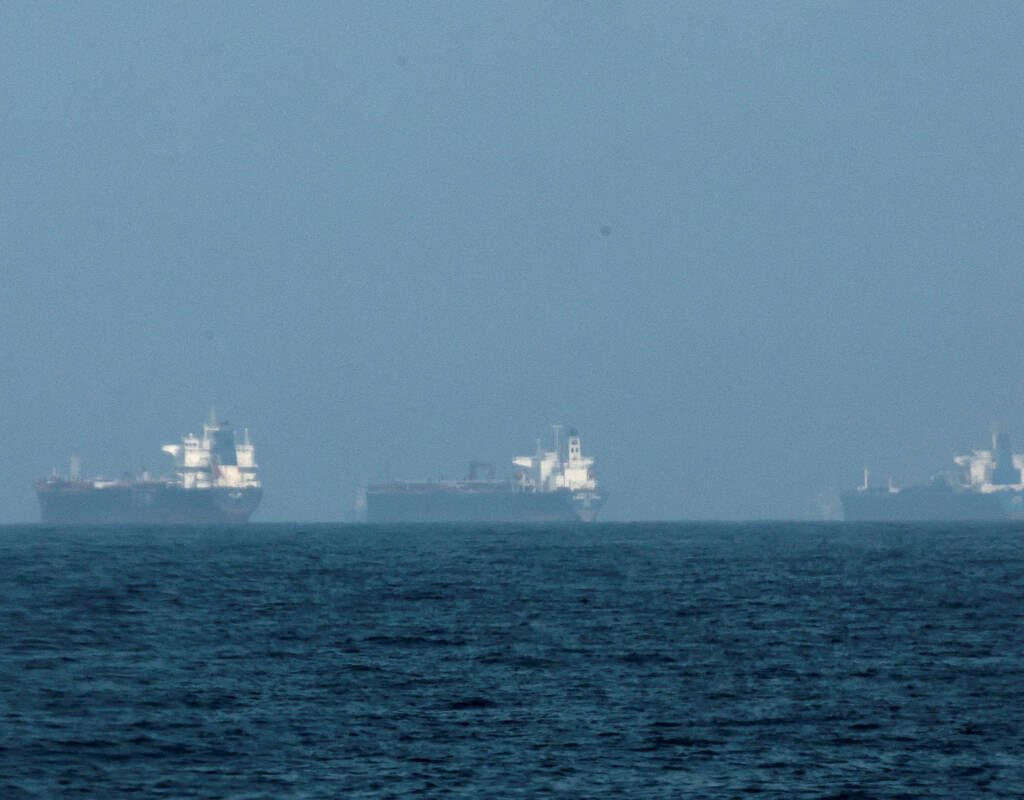
With hostilities continuing in the Middle East and tankers unable to cross the Strait of Hormuz amid the threat of Iranian drone attacks, investors were bracing for a long stretch of higher energy costs.
Investors awaited Washington’s response, said Helima Croft, head of global commodity strategy at RBC Capital Markets. “With no clear definition of what winning looks like, it is hard to forecast whether this will be a multi-week or multi-month conflict.”
GLOBAL MARKETS SINK
European shares tumbled to their lowest in more than two months on Monday, with the pan-European STOXX 600 down 1.76 per cent in a third session of losses. The benchmark index shed 5.5 per cent last week, its worst weekly performance in nearly a year.
The oil price spike was sobering for major oil importers in Asian markets, with Japan’s Nikkei .N225 closing down 5.2 per cent after a 5.5 per cent drop.
China, another big oil importer albeit with a huge stockpile of crude, saw its blue-chip index fall roughly one per cent. China on Monday said inflation had already picked up in February before the current oil surge, with consumer prices rising 1.3 per cent on the year, not necessarily a negative development, given the country has long struggled with disinflation.
Lisa Shalett, chief investment officer at Morgan Stanley Wealth Management, wrote in a note on Monday that the U.S. equity market may still seem placid but there are “extreme” rotations and stock dispersions beneath the surface.
“Over the past 80 years, war-induced oil shocks have not been kind to equities, as nearly every episode has catalyzed a recession and market sell-off,” Shalett wrote.
CENTRAL BANKS FACE INFLATION CONUNDRUM
In bond markets, the risk of rising inflation outweighed safe-haven considerations to shove yields higher globally. Yields on 10-year Treasury notes rose 2.6 basis points to 4.158 per cent, up from a trough of 3.926 per cent just a week ago.
Interest rate futures slipped as investors feared the risk of higher inflation would make it harder for the Federal Reserve to ease policy, though disappointing U.S. jobs numbers seemed to argue for stimulus.
Data on U.S. consumer prices due on Wednesday is forecast to show the annual rate holding at 2.4 per cent in February.
The Fed’s preferred measure of core inflation due on Friday is forecast to hold at 3.0 per cent, well above the central bank’s two per cent target, and analysts see a risk of an even higher number.
The danger of energy-driven inflation has led markets to wager the next move in rates from the European Central Bank could be up, possibly as early as June.
For the Bank of England, markets have shifted to pricing just a 40 per cent chance of one more easing, compared with two cuts or more before the Middle East conflict started.
Nervous investors sought the liquidity of dollars while shunning currencies from countries that are net energy importers, including Japan and much of Europe.