The Canadian GMO mustard wars: Dijon vs canola
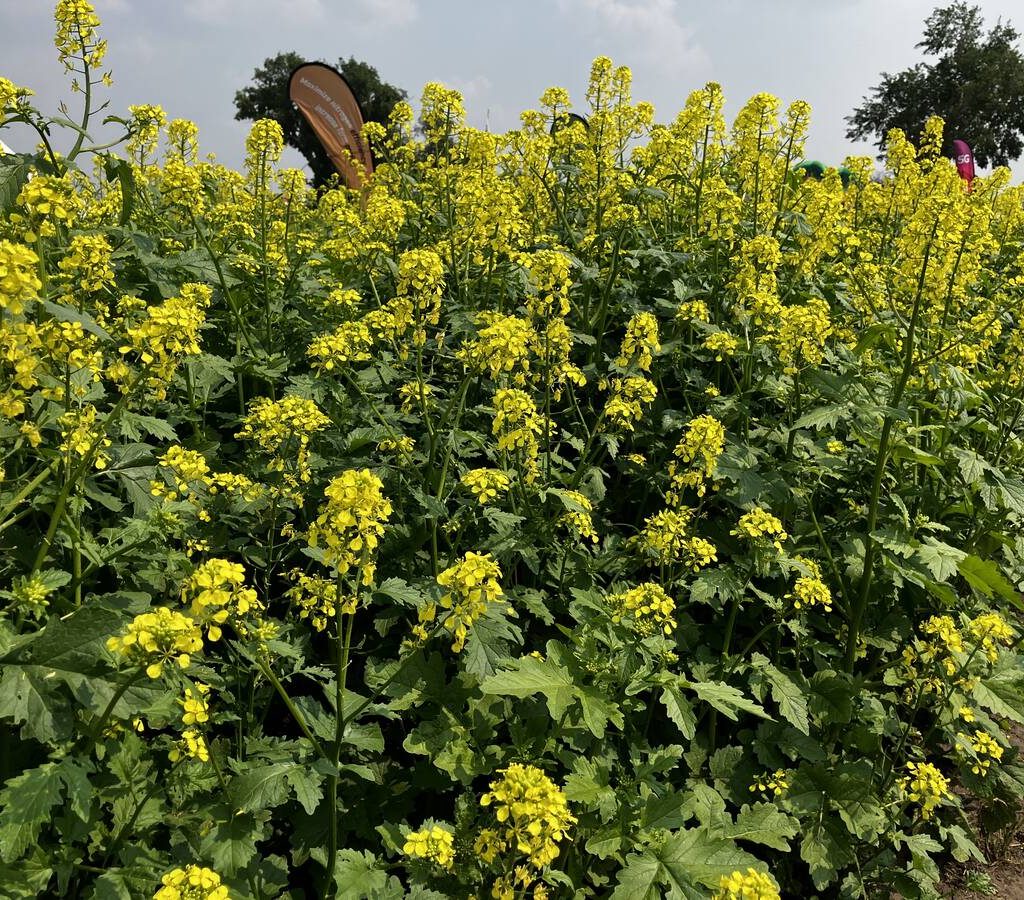
Mustard has been a lifeline for farms in areas where canola routinely fails to grow. BASF's InVigor Gold GMO mustard hybrid could open those same acres to canola-like oil production — or contaminate the traditional crop. Photo: Greg Berg
Regina | Reuters — Farmer Dallas Leduc can’t wait for a new genetically modified mustard plant that can grow in his sandy, heat-stressed soil in a corner of Saskatchewan once thought too arid to farm.
Leduc, a fourth-generation producer who grows more than 10,000 acres of wheat, durum, mustard, canola, peas and lentils in an area dominated by grazing cattle, thinks that the long-awaited technological improvement, a plant that produces canola-like oil, could help him eke out a few more dollars per acre.
“All I’m trying to do is improve the bottom line of our farm,” he said.
WHY IT MATTERS: Mustard growers worry BASF’s InVigor Gold hybrid will destroy Canada’s condiment mustard industry. BASF says the oilseed could be grown safely in arid regions where canola routinely fails.
But Trent Dewar, who farms elsewhere in the Canadian semi-desert known as Palliser’s Triangle, fears the new GMO mustard plant will ruin the pure mustard he grows for the premium Dijon bottlers in France, the United States and Japan, as well as other specialty mustards. The industry is worth about $150 million (C$209 million) in exports annually — only a fraction of the $8.9 billion (C$12.4 billion) canola exports market. But in a geography where canola fails more often than it flourishes, mustard has been the lifeblood of many farms since growers started planting it 90 years ago.
“Everybody I’ve talked to personally is quite shell-shocked that this would even be considered,” he said.
Mustard is a tiny crop in Canada, with usually less than 200,000 metric tons of mustard produced by a few hundred farmers. Mustard production soars and sags with volatile world prices and local weather, like other specialty crops. Canadian canola growers, by contrast, usually plant more than 20 million acres of their crop, which produces upwards of 19 million metric tons. That makes canola Canada’s biggest source of crop income by far.
That’s why so many are excited about the drought-resistant GMO mustard plant. Global agricultural giant BASF hopes to win approval from Canadian and U.S. agencies for commercialization as soon as next year in the U.S. and a couple of years later in Canada.
It’s not without risk, however. The GMO plant looks nearly identical to a traditional mustard plant. Neighboring fields could be contaminated with seeds and pollen carried on the wind or by bees. Both traditional brown and oriental mustards and the new mustard canola are brassica junceas, so they can breed, with pollen from one type fertilizing the other.
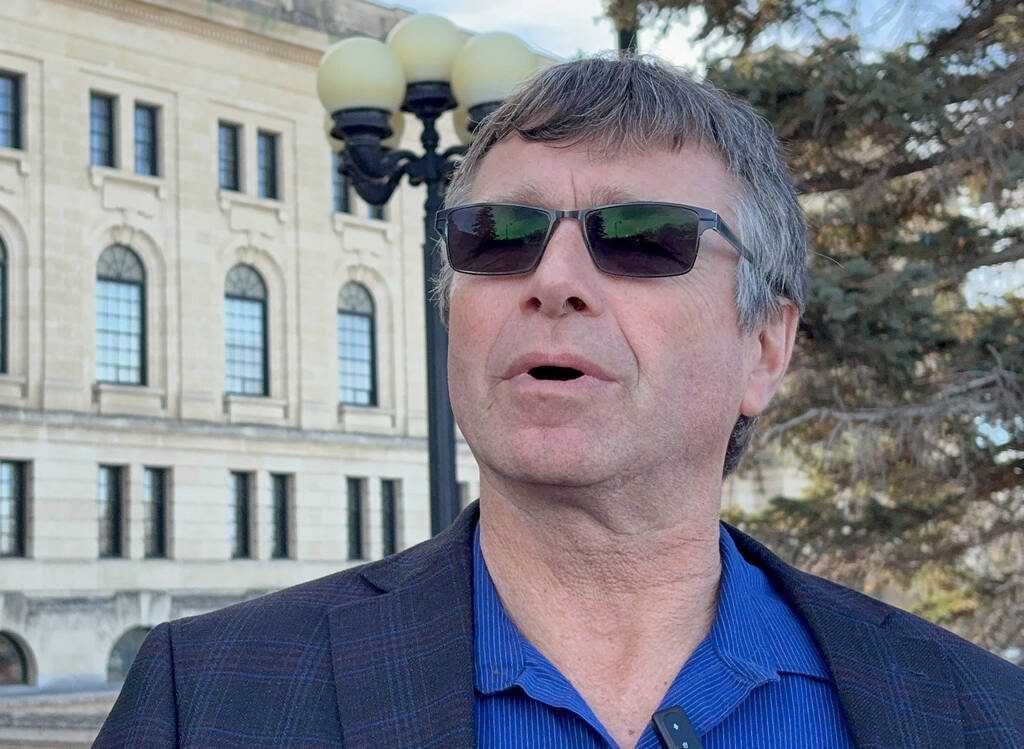
“It has the potential of wrecking a whole industry,” said farmer Norm Hall, the chair of SaskMustard, which represents Saskatchewan’s mustard growers. The group is lobbying the government in Ottawa to keep the crop out of Canada.
Brent Collins, head of BASF’s seeds and traits division in Canada, said the crop was an “innovation” that would “truly unlock new canola acres, helping meet market demand.”
The French connection
France, which sources about half its mustard supplies from Canada, has a strict non-GMO standard. Other large global buyers are similarly stringent. Many Canadian mustard growers and sellers fear the door could slam shut if traces of the hybrid mustard-canola were detected.
“They look at it like a razor blade that shows up in a bag of rice,” said Peter Gorski of Broadgrain, a company that sells Canadian specialty crops like mustard to buyers around the world.
Foreign buyers have not said how they will respond if GMO traces appear. Most contracts contain a commitment to be non-GMO, and two contracts shared with Reuters contained that specification. A French law limits the presence of GMOs in the food supply, but the threshold of acceptable traces is mostly left to the buyer.
Christophe Planes, sales and marketing director for French mustard processor Reine de Dijon, said the GMO plant could spell trouble for Canadian exports.
About half of the company’s seeds are sourced from Canada, he said, adding: “We’re clearly committed to a non-GMO policy.”
“Since France is quite strict regarding GMOs we systematically check all our supplies to ensure that there are no traces, or very few traces,” Planes said.
Since Canada’s crippling drought of 2021, which hampered mustard production and triggered panic in French shoppers finding grocery store shelves bare of the condiment, France has boosted its own domestic supplies. There are other sources for mustard seed, such as Argentina, Germany and Ukraine, but Canadian mustard is both high quality and cheap, Planes said. Switching could affect quality and raise prices.
A flax grower’s nightmare, revisited
Canadian mustard growers are haunted by a historical precedent: tainted flax. Canada lost a well-paying and steady European market for flax when traces of a GMO variety called Triffid were found in European food products in 2009. Exports plunged and never recovered.
Mustard is an ancient crop, its seeds found in stone-age settlements of the Near East, in ancient Sumerian texts, and even in the tomb of Egypt’s Pharaoh Tutankhamun. In the Bible, Jesus of Nazareth told a parable about the mustard seed.
By contrast, the mustard-canola hybrid is a 21st-century scientific marvel, employing decades of traditional plant breeding and later GMO methods to produce a mustard plant that produces a version of canola oil, and that survives a herbicide controlling the plague of tumbleweeds in western North America. Many farmers in the mustard-growing region have been eagerly awaiting this new crop since the 1990s, but it has been a tortuous scientific development process. Canola is a cool-weather crop that thrives in northern latitudes like Canada, but climate change’s bouts of extreme heat and drought are expected to make it more challenging to grow.
Some of the original research into using a mustard plant to produce canola-like seed was done by scientists working for a farmers’ cooperative in the 1990s, as well as by university researchers. Now global agriculture giant BASF has brought what it calls InVigor Gold to the cusp of commercialization.
Traditional clashes with bold and new
From discussions with mustard and canola industry key players, it is clear that the two camps have sharply different assessments of whether the GMO mustard can flourish alongside traditional mustard.
“We know we can’t co-exist,” said Rick Mitzel, executive director of Sask Mustard.
BASF, however, thinks two million acres of its mustard-canola could be grown in arid areas of Canada and the U.S., with safeguards against pollen flow and seed spread between mustard and canola fields.
“We understand the areas that mustard growers are concerned about and it’s our responsibility to be able to explain what exactly we’re doing to be able to appease some of these concerns,” said Collins.
The two sides have sporadically met in recent years, but as the widespread release of the crop approaches, mustard growers and the mustard industry have grown desperate.
At an industry meeting this winter, mustard growers and merchants called for their representatives to take legal and political action to block the introduction of InVigor Gold. But Hall told them it would be an “uphill battle” because BASF is following the usual crop development protocols, and market impact is not considered during the Canadian crop approval processes.
Kacy Gehring of Mountain States Oilseeds, a U.S. mustard merchant in American Falls, Idaho, said the concern about GMO contamination destroying markets could trigger farmers to just stop growing mustard. That wouldn’t just be a problem for companies like hers, but also bad for world culinary culture, she said.
Farmer Leduc understands the worries of his mustard-growing neighbors, but doesn’t apologize for wanting to get InVigor Gold into his fields as soon as possible. Farming in an arid region isn’t easy, but it’s where his great-grandfather settled. He needs every survival tool he can get.
“I wish I was in a wetter part of the province,” he said.
— Additional reporting by Sybille de la Hamaide and Gus Trompiz in France.