
2023 Atlantic hurricane season records 4th-most named storms
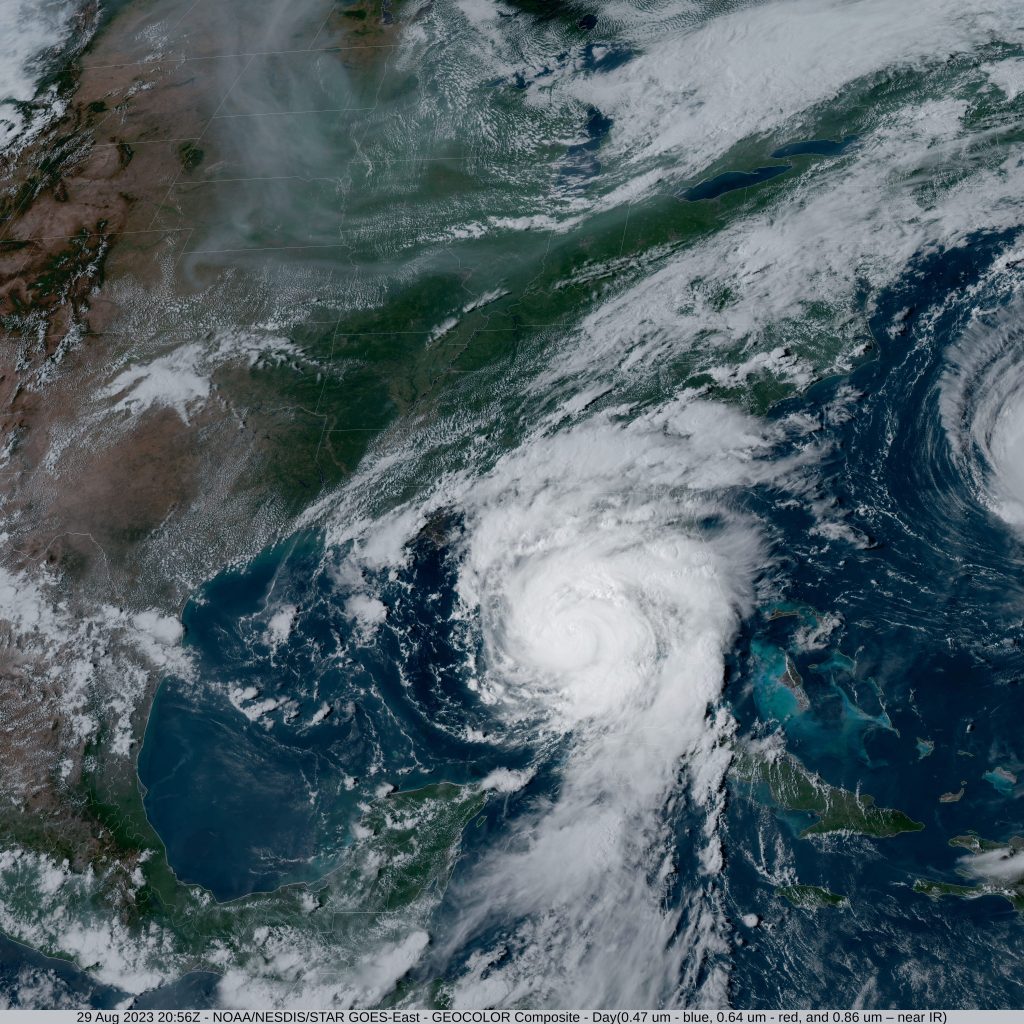
NOAA – The above-normal 2023 Atlantic hurricane season, which officially ends on Nov. 30, saw 20 named storms, which ranks for the fourth-most named storms in records going back to 1950, according to a report from the National Oceanic and Atmospheric Administration (NOAA). The season was characterized by record-warm Atlantic sea surface temperatures and a strong El Nino.
Seven of the named storms were hurricanes and three intensified to major hurricanes. An average season has 14 named storms, seven hurricanes and three major hurricanes.
Hurricane Idalia was the only U.S. landfalling hurricane in 2023. It made landfall as a category-3 hurricane on Aug. 30 near Keaton Beach, Florida, causing storm surge inundation of 7 to 12 feet and widespread rainfall flooding in Florida and throughout the southeast.
Tropical Storm Ophelia made landfall as a strong tropical storm with 70 mph winds on Emerald Isle, North Carolina, on Sept. 23 causing widespread heavy rainfall, gusty winds and significant river and storm surge flooding in portions of eastern North Carolina.
Hurricane Lee made landfall as a post-tropical cyclone in Nova Scotia, Canada, on Sept. 16. Swells generated by Lee caused dangerous surf and rip currents along the entire U.S. Atlantic coast. Strong winds with hurricane‑force gusts from Lee caused extensive power outages in Maine and in parts of Canada.
The 2023 Atlantic seasonal activity fell within the NOAA Climate Prediction Center’s predicted ranges for named storms and hurricanes in the August updated outlook.
“The Atlantic basin produced the most named storms of any El Nino influenced year in the modern record,” said Matthew Rosencrans, lead hurricane forecaster at NOAA’s Climate Prediction Center — a division of NOAA’s National Weather Service. “The record-warm ocean temperatures in the Atlantic provided a strong counterbalance to the traditional El Nino impacts.”
The eastern Pacific basin hurricane season was also above normal with 17 named storms, of which 10 were hurricanes and eight of those major hurricanes. From Aug. 16 to 21, Tropical Storm Hilary brought widespread heavy rainfall and flooding to Southern California, with some areas receiving up to 600 per cent of their normal August rainfall. Hilary resulted in the first ever issuance of Tropical Storm Watches and Warnings for the Southern California coastline by NOAA’s National Hurricane Center. In addition, the Center distributed key hazard focused messages for Hilary in Spanish through the agency’s new language translation project.
Hurricane Otis made landfall near Acapulco, Mexico, on Oct. 25 as a category-5 hurricane with sustained winds of 165 mph. Otis holds the record as the strongest landfalling hurricane in the eastern Pacific after undergoing rapid intensification in which wind speeds increased by 115 mph in 24 hours.