
Atlantic hurricane season comes to a close
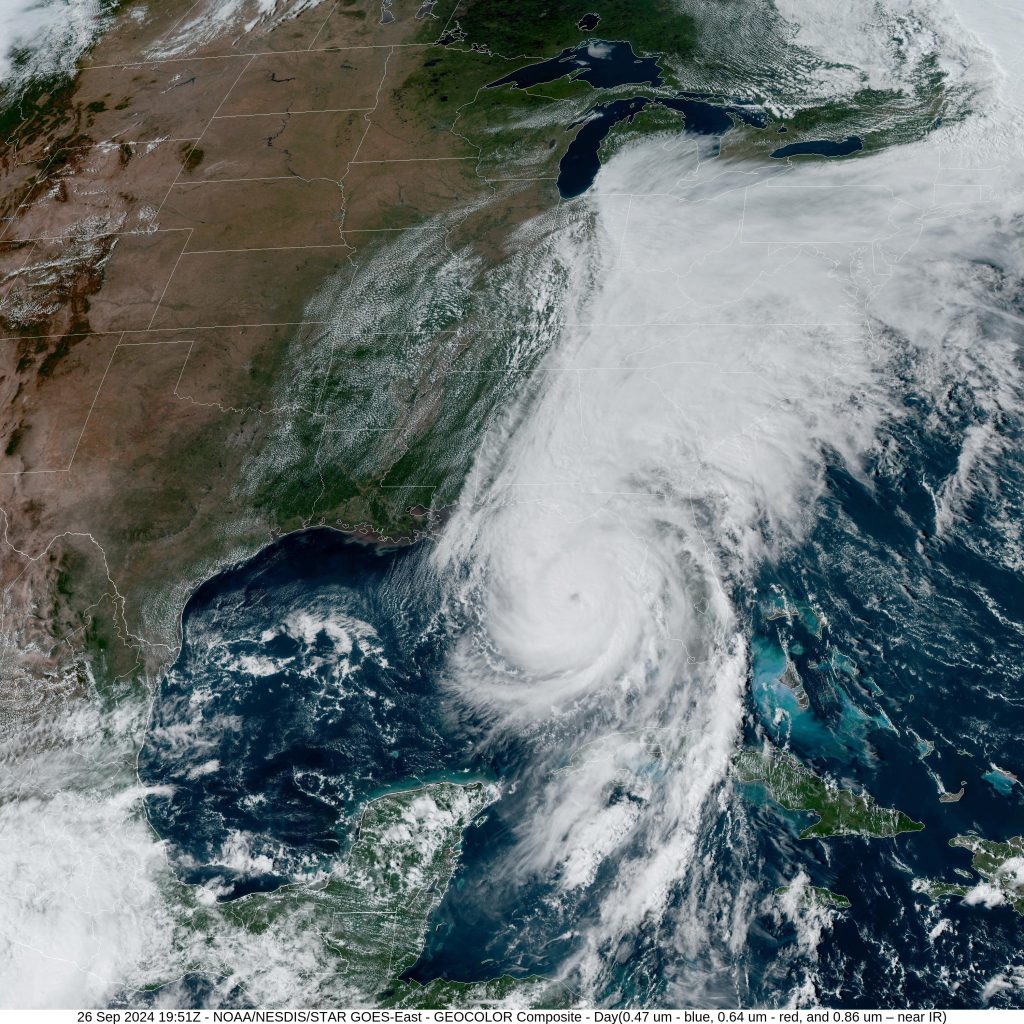
NOAA's GOES-16 satellite captured Hurricane Helene as it approached Florida at 3:51 p.m. EDT on September 26, 2024. (Image credit: NOAA Satellites)
National Oceanic and Atmospheric Administration – The 2024 Atlantic hurricane season, which officially ended on Nov. 30, showcased above-average activity, with a record-breaking ramp up following a peak-season lull.
The Atlantic basin saw 18 named storms in 2024 (winds of 63 kilometres per hour or greater). Eleven of those were hurricanes (winds of 119 km/h or greater) and five intensified to major hurricanes (winds of 179 km/h or greater). Five hurricanes made landfall in the continental United States, with two storms making landfall as major hurricanes. The Atlantic seasonal activity fell within the predicted ranges for named storms and hurricanes issued by NOAA’s Climate Prediction Center in the August 2024 Hurricane Season Outlook. An average season produces 14 named storms, seven hurricanes and three major hurricanes.
Twelve named storms formed after the climatological peak of the season in early September. Seven hurricanes formed in the Atlantic since September 25 — the most on record for this period.
“The impactful and deadly 2024 hurricane season started off intensely, then relaxed a bit before roaring back,” said lead hurricane forecaster Matthew Rosencrans at the NOAA’s Climate Prediction Center. “Several possible factors contributed to the peak season lull in the Atlantic region. The particularly intense winds and rains over Western Africa created an environment that was less hospitable for storm development.”
Hurricane Beryl was the earliest Atlantic basin Category 5 hurricane on record. It caused significant storm surge flooding across parts of Texas and Louisiana after making landfall near Matagorda, Tex., as a Category 1 storm.
Hurricane Helene made landfall as a Category 4 storm on the Florida Gulf Coast on Sept. 26. The storm caused catastrophic flooding across the southern Appalachians, widespread wind damage from the Gulf Coast to the North Carolina mountains and storm surge flooding along portions of western Florida. Preliminary data indicate that Helene was the deadliest hurricane to affect the continental U.S. since Katrina in 2005, with more than 150 direct fatalities, the majority of which occurred in North Carolina and South Carolina.
Hurricane Milton made landfall as a Category 3 near Siesta Key, Fla., on Oct. 9 and resulted in a tornado outbreak that produced 46 tornadoes and caused torrential rainfall and localized flooding with total rainfall amounts of 250 to 375 millimetres (and higher). Milton produced a destructive storm surge between Siesta Key and Ft. Myers Beach, Fla., including Charlotte Harbor. Milton’s rate of rapid intensification was among the highest ever observed, with a 144 km/h increase in wind speed during the 24-hour period from early Oct. 6 to early Oct. 7.
Hurricane season activity was below-normal for both the eastern Pacific basin and central Pacific basin and fell within predicted ranges, respectively.
The eastern Pacific basin hurricane season had 12 named storms, with four becoming hurricanes and three intensifying to major hurricane status. The central Pacific had two named storms.