
Climate change on animals will be multi-faceted says study
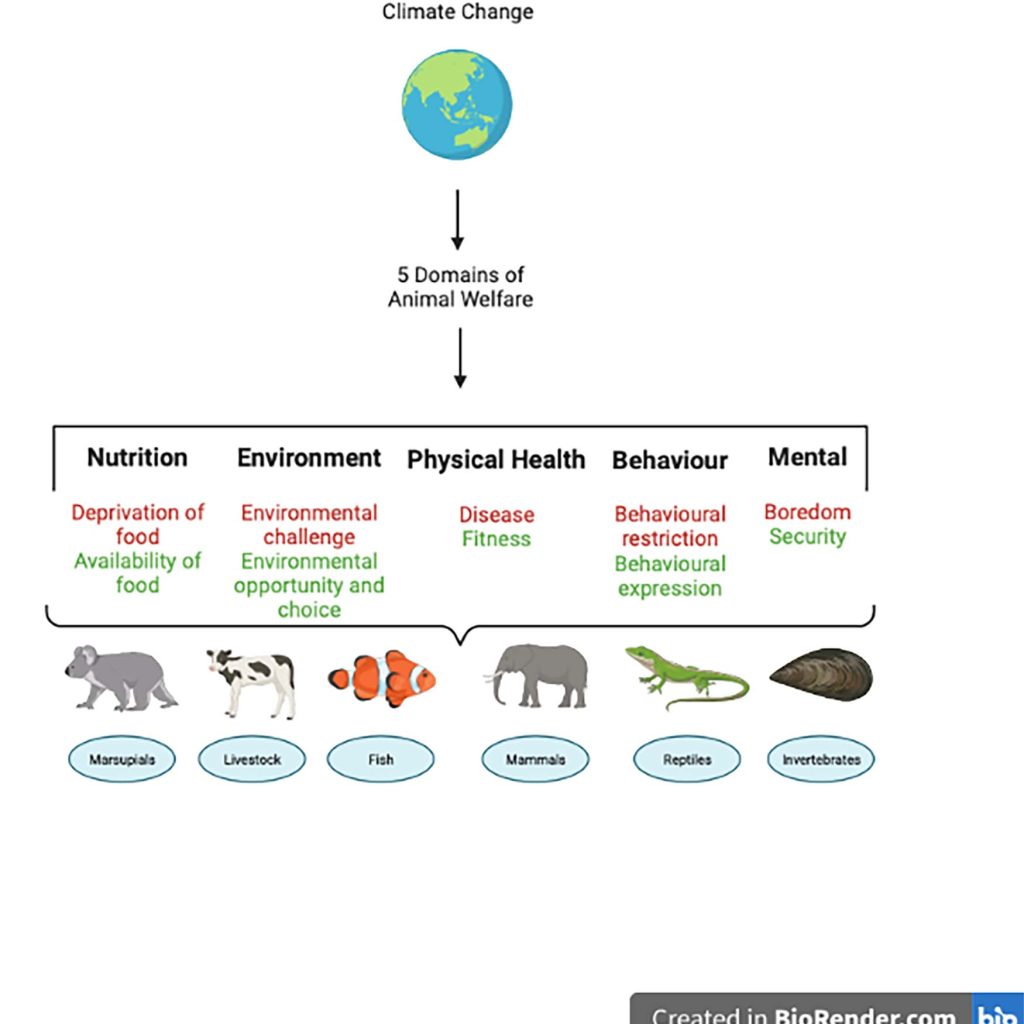
CABI (WeatherFarm) – A new study published in CABI Reviews suggested that the impact of climate change on animals will be “multi-faceted” with “cascading effects” across five welfare domains including nutrition, environment, behaviour, physical and mental health.
The research highlighted how researchers need to carefully consider which domains are immediate and future priorities to safeguard the welfare and longevity of animals for food, such as domestic pets and those for conservation in nature reserves and zoos.
Animals at risk from the impacts of climate change included bats, zebrafish, stony creek frogs, koalas, African elephants, chickens, and dairy cows.
It’s argued in the review that although there are variations in how animals respond biologically to stress, in general, the five domains model provides a robust tool for research use, and to evaluate the proximate effects of climatic variability on animals.
The study provided a broad overview of the impacts of climate change in animal welfare, drawing on examples from various animal groups across terrestrial and aquatic habitats, encompassing both wildlife and domesticated species.
“While researchers have extensively examined the effects of climate change on animals, the direct correlation between climate change and animal welfare, particularly in the context of wild animals, remains relatively scarce in existing studies,” said Dr Edward Narayan, Senior Lecturer of Animal Science in the School of Agriculture and Food Science at the University of Queensland, Australia.
“In this review, our research group – The Stress Lab – presents a series of wildlife and domesticated animals examples from various countries, across both aquatic and terrestrial systems and provide an overview of the impacts of climate change on each of the five domains of animal welfare. We hope that future researchers will apply the animal welfare domains to evaluate how climate change impacts on animals, and further research will pave the way to the protection of animals from the catastrophic impacts of climate change,” Narayan continued.
The review highlighted research that showed how heat stress, for example, in dairy cows has resulted in a 35 per cent reduction in milk production. Heat stress significantly impacted lactation performance, immune function, and calf health.
However, monitoring cows’ activity and rumination time helped to detect heat stress, and appropriate heat dissipation strategies such as sunshades and sprinklers can mitigate its effects, the researchers suggested.
It also argued that broiler chickens kept under hot conditions for four days showed higher cases of necrosis – reducing quality of their life and meat. The welfare of birds, especially mature broilers, under warmer conditions is of great concern.
Birds have a limited capacity for heat regulation as they lack sweat glands, and regulate temperature by panting, limiting their activity and drinking more. Accordingly, air conditioning units may be required to maintain an optimal production temperature.
Drought and scarcity of resources are also key contributors to the death of elephants, the scientists found. They argued that as the largest extant terrestrial mammal, the African elephant has significant daily food and water needs.
But as droughts become more frequent and predictable, the availability of water and vegetation cover declines, increasing elephant heat and nutrition stress, contributing to the elevated elephant mortality currently being witnessed.
The study also stressed that climate change has been recognised as a major factor in driving population decline across many species of marsupial, including the koala.
Increasing mean temperatures mean species such as the koala will be required to expend more energy to maintain body temperature, using a food source that is reduced in quality due to current climate change projections.
And even domestic cats and dogs are affected by climate change, according to the scientists. They said, for instance, that certain breeds of dog are susceptible to heat stroke while heat-related diseases are a leading cause of death in military working dogs.
Around half of all dogs in the United Kingdom are overweight with insufficient exercise being a factor and weather conditions can be a potential hindrance to dog walking. The review highlighted that 87 per cent of owners reported they exercise their dogs less during hot weather. The gradual increase in global temperature has the potential to decline the level of welfare for dogs which, the scientists said, may also lead to changes in the role of dogs in human society.
“As climate change drives more wild populations to ecological limitations, there will be potential welfare consequences and considerations to explore; for example, when vulnerable species would need to be transferred to new environments (e.g., captive breeding), should food and habitat become limiting resources,” Narayan added.
“Likewise, production animals and other domesticated species will be impacted by the extreme environmental changes with consequences on each of the dimensions within the five domains of animal welfare,” he said.