Drought to expand in U.S. West, Plains: NOAA
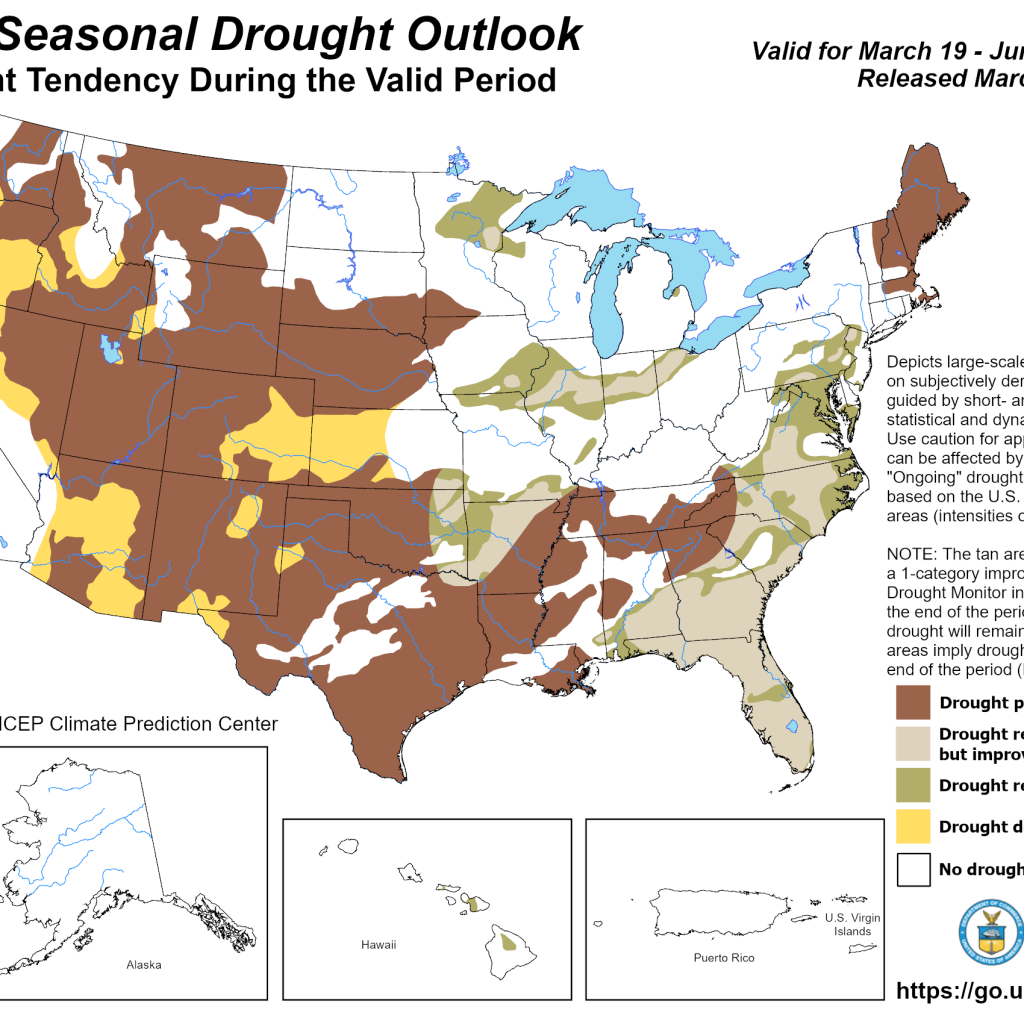
This map depicts where drought persistence, development or improvement is the most likely outcome based on short- and long-range statistical and dynamical forecasts from March 19 through June 30, 2026. (Image credit: NOAA)
National Oceanic and Atmospheric Administration – Most of the western half of the United States and parts of the Plains should see drought conditions persist or develop in the coming months, the National Oceanic and Atmospheric Administration said in its U.S. Seasonal Drought Outlook released on March 19.
One of the main culprits will be above-normal temperatures for most of the U.S. during April, May and June, forecasted by the NOAA’s National Weather Service. Currently, moderate to exceptional drought exists in 55 per cent of the continental U.S.
“Factors influencing NOAA’s Spring Outlook include the El Niño-Southern Oscillation (ENSO), low snowpack in the West and soil moisture content throughout the lower 48 states,” said Ken Graham, director of the NWS. “This spring will also feature a transition from La Niña to ENSO-neutral conditions, meaning neither El Niño nor La Niña.”
The highest likelihood of enhanced warmth from April to June ranges from the Southwest to the Inter-Mountain West regions. A lack of precipitation is most likely from the Pacific Northwest to the central Rockies. Above-normal precipitation is expected for western Alaska, the eastern Great Lakes, the mid-Atlantic region and parts of the Southeast.
The overall flood risk for this spring across most of the continental U.S. is considered normal to below normal. However, the Red River Valley from Grand Forks, N.D. to the Canada-U.S. border is showing minor to moderate risk. No areas in the U.S. showed a major flood risk.