
Extreme, unusual heat in February
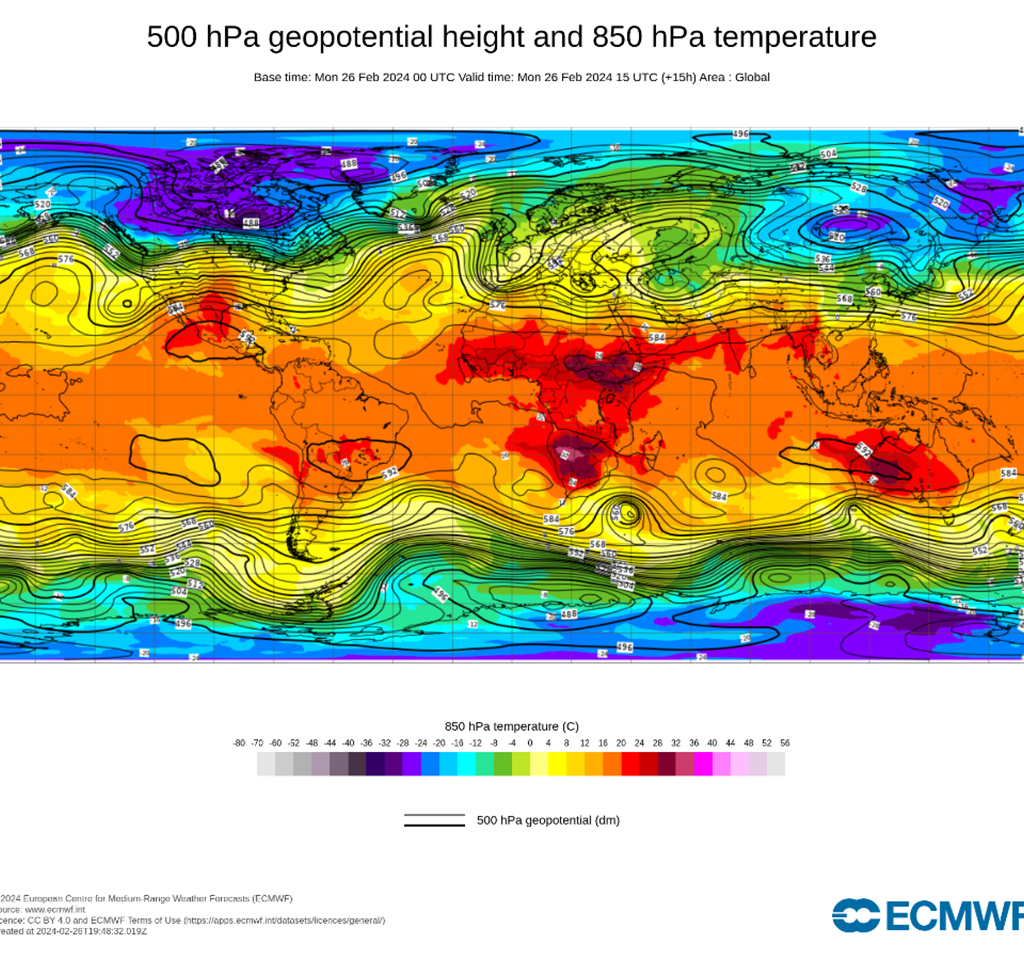
Photo credit: World Meteorological Organization.
World Meteorological Organization – February 2024 ended with extreme heat in the southern hemisphere summer and high temperatures atypical of the northern hemisphere winter, according to the World Meteorological Organization (WMO).
Parts of North and South America, northwest and southeast Africa, southeast and far eastern Asia, western Australia and Europe all saw record-breaking temperatures, either on a daily basis or for the entire month.
“The anomalous heat is consistent with the persisting warming observed since June 2023, with seven consecutive new global monthly temperature records, including January 2024. Global sea surface temperatures are record high. Whilst the El Niño event has stoked temperatures in some parts of the world, human-induced climate change is the long-term major contributing factor,” said WMO climatologist Alvaro Silva.
On the other hand, a large part of northwestern Canada, central Asia and from south-central Siberia to southeastern China witnessed exceptional cold during the last week of the month.
The meteorological winter in the northern hemisphere and summer in the southern hemisphere finish at the end of February.
In the United States, warm conditions have dominated much of the mid-section of the country due to a dry and warm air mass under the influence of a high-pressure system. A large area of record high temperatures affected much of this region on Feb. 26 and 27 before giving way to more seasonal and much colder weather.
According to preliminary data from the United States National Weather Service (NWS), about 78 locations across the country tied or broke a record high on Feb. 26, and 69 more on Feb. 27. Overnight minimum temperatures were also exceptionally high. On Feb. 27, about 70 stations tied or broke previous records, including Houston with 21.1 degrees Celsius. Daily and monthly records span from Minnesota near the Canadian border to Texas near the Mexican border.
The highest temperature was recorded in Killeen/Fort Hood, Tex. at 37.8 C. Wildfires swept across the Texas Panhandle, with the Smokehouse Creek fire described as the second largest in the history of the state. A Red Flag Warning was active in the U.S. Plains, what means critical fire weather conditions.