Grasslands, wetlands converted to farmland at faster rates
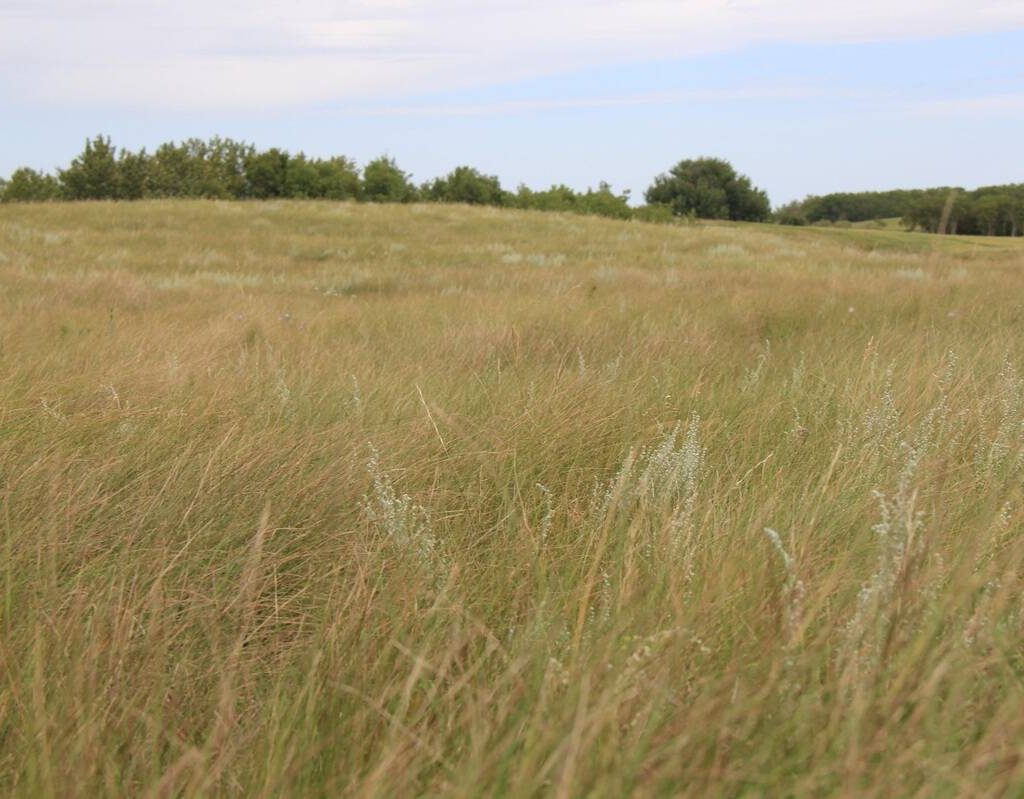
The Saskatchewan Stock Growers Foundation has completed two 25-year easements to protect grasslands in the province. Photo: Lisa Guenther
Senckenberg Biodiversity and Climate Research Centre – An international team of researchers have determined that grasslands and wetlands are being converted to farmland at faster rates than forests.
Scientists from the Senckenberg Biodiversity and Climate Research Centre in Frankfurt, Germany, as well as from Sweden, the United States and the Netherlands, studied to what extent farmland encroached onto non-forest ecosystems between 2005 and 2020. They determined that grasslands and wetlands were being converted at a rate nearly four times faster than forests. Out of the total area affected worldwide, Brazil led all countries at 13 per cent followed by Russia, India, China and the U.S. at six per cent each.
“We have found that these ecosystems are being converted to pasture and cropland at an alarming rate,” said Dr. Thomas Kastner, a scientist at Senckenberg and one of the study’s authors. “The main drivers are the demand both on the domestic and international markets for various agricultural products, especially meat, cereals, nuts, and oilseeds.”
Between 20 to 35 per cent of the carbon sequestered worldwide is stored in grasslands, with 33 per cent of global biodiversity hotspots found in them. Globally, 54 per cent of arable land conversion accounted for food production, while 34 per cent was used to produce animal feed – with the latter figure exceeding 50 per cent in Brazil, Argentina, the U.S., China, and the European Union.
“Whether for water storage, protection against soil erosion, or as habitat for countless animal and plant species, grasslands provide important ecosystem services that directly benefit both local communities and the global climate,” said co-author Dr. Siyi Kan.
“In Brazil and Argentina, around 70 per cent of the total arable land converted and around 80 per cent of the land used to grow animal feed accounted for export production. This clearly indicates the strong link between agricultural production and consumption in wealthy and fast-growing economies,” said Kastner.
“Our results show the risks that agricultural land conversion poses to individual regions, identify the natural non-forest ecosystems that are in particular need of protection, and offer suggestions where to start making changes along global supply chains,” said Kan. “To prevent this utilization pressure from simply shifting to other ecosystems, we need better coordinated political measures and greater responsibility on the part of producers and consumers in internationally networked supply chains.”