
How hot is too hot?
By TUM release
| 3 min read
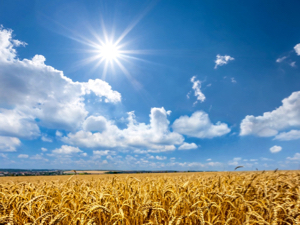
Photo: iStock/Getty Images
<p>Photo: iStock/Getty Images</p>
The recent heat wave in Western Canada has caused stress for humans, animals and crops, with the preferable temperatures for all three relatively similar, according to research from Technical University of Munich (TUM) that also looks into adaptation strategies.
“We have studied which temperatures are preferable and which are harmful in humans, cattle, pigs, poultry, and agricultural crops and found that they are surprisingly similar,” said Senthold Asseng, professor of digital agriculture at TUM. According to the study, preferable temperatures range from 17 to 24 C.
How hot is too hot for humans?
At high humidity, mild heat strain for humans begins at about 23 C and at low humidity at 27 C. “If people are exposed to temperatures above 32 C at extremely high humidity or above 45 C at extremely low humidity for a lengthy period of time, it can be fatal,” said Asseng. “During extreme heat events with temperatures far above 40 C, such as those currently being observed on the U.S. Northwest coast and in Canada, people require technical support, for example in the form of air-conditioned spaces.”
To mitigate increasing heat strain, Asseng cites a variety of strategies, including increasing natural shade from trees or structural shading. Cities and buildings can be made more temperature-passive, for example, by using roof and wall insulation or by using lighter, reflective roof and wall colors to reduce heat strain.
How do high temperatures affect livestock?
In cattle and pigs, heat strain occurs at 24 C with high humidity and at 29 C with low humidity. The milk yield from cows can decrease by 10 to 20 per cent when exposed to heat stress, and the fattening performance in pigs is also reduced. The comfortable temperature range for poultry is 15 to 20 C. Chickens experience mild heat strain at 30 C. At 37 C and above, they experience severe heat stress and their egg laying rate declines.
Heat stress overall leads to reduced growth in cattle and dairy cows, pigs, chickens and other livestock, which means both lower yields and reproductive performance. “There are examples of evolutionary adaptations to warm weather in terrestrial mammals. Transylvanian naked chickens are more heat tolerant than other varieties of chickens because of a complex genetic mutation that suppresses feather growth. They are naturally air-conditioned because they lack feathers on their necks,” said Asseng.
How do crops react to high temperature?
“In crops, the optimal temperature zone and temperature thresholds seem to be more diverse due to differences between species and varieties,” said Asseng.
Cold-temperate crops such as wheat, for example, do better at cooler temperatures, while warm-temperature crops such as corn are sensitive to frost but can tolerate warmer temperatures. Strategies to reduce heat stress in crop production include changes in planting dates to avoid heat stress later in the season, irrigation (if feasible), switching to more heat-resistant crops, and breeding to increase heat tolerance.
How is climate change affecting life on Earth?
“By the end of the century, 45 to 70 per cent of the global land area could be affected by climate conditions in which humans cannot survive without technological support, such as air conditioning. Currently, it’s 12 per cent,” said Asseng. This means that in the future, 44 to 75 per cent of the human population will be chronically stressed by heat. A similar increase in heat stress is expected for livestock, poultry, agricultural crops and other living organisms.
“Genetic adaptation to a changing climate often takes many generations. The time available is too short for many higher forms of life. If current climate trends persist, many living things could be severely affected or even disappear completely from Earth due to temperature change,” Asseng added.