Letting farmers produce own fertilizer, e-fuels
May be possible with new method
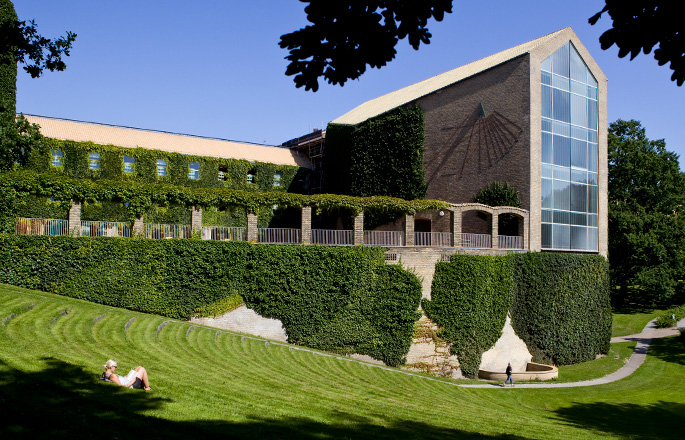
Aarhus University (WeatherFarm) – Aarhus University in Denmark has initiated a research project that aims to revolutionize ammonia production by utilizing variations in renewable energy production.
“We believe that this technology has huge potential to drastically change the global market situation for ammonia and facilitate the green transition of a number of sectors,” stated Associate Professor Emil Dražević, head of the Power to Chemicals research group at Aarhus University about the new research project AELECTRA. The project is tasked to develop a technology that will enable companies, industries and farmers to produce liquid ammonia more economically and environmentally friendly than today’s centralized Haber-Bosch process.
The project has received funding of around EUR 3.5 million from the European Innovation Council’s Pathfinder programme and has participants from France, the Netherlands, Belgium, Norway, Greenland and Denmark. Aarhus University is in charge of the project.
“AELECTRA will build a prototype that can store electrical energy in liquid anhydrous ammonia, and that is extremely well-suited for decentralized use. The decentralized production capability takes full advantage of spatial and temporal variations in renewable energy production,” said Associate Professor Jacopo Catalano, head of the Membrane Engineering research group and CO-PI of AELECTRA.
“The technology will be relevant for several industrial sectors, including power generation, food, pharmaceutical industry, shipping and, of course, fertilizer production. Farmers will be able to produce their own ammonia for fertiliser or e-fuels for emissions-free tractors,” Catalano continued.
The new technology could produce and separate ammonia at an energy efficiency corresponding to the Haber-Bosch process. But unlike the Haber-Bosch process, the new technology will work under far more gentle conditions, without the need for heat exchangers or high pressures. This will halve investment costs, making the technology attractive for decentralised production.
“Our calculations show that the technology outperforms Haber-Bosch in production scales of up to 1,000 kilograms per hour. The prototype we’re building produces and separates ammonia from the reactor and stores it as liquid in steel cylinders,” said Drazevic.
Today, ammonia is among the 10 most important chemicals produced in the world in terms of volume. The substance is primarily used to make fertilizers for modern agriculture, but green ammonia in particular also has a future for energy storage and carbon reduction in many other industries.
“The green transition is well underway with 19 per cent of EU’s primary energy coming from renewables. Often forgotten in this equation, is the change from a highly centralized energy production scheme to a decentralized one, a change that also needs to take place for large downstream energy consumers i.e., the fabrication of ammonia. The AELECTRA project displays a novel idea enabling a fully decentralized value chain, from renewable power generation to green ammonia. This empowers use cases where a local rural community can use solar panels to produce their own fertilizer. Or where a local harbour with a couple of wind turbines can produce their own ammonia to fuel their fishing industry,” said Nicolai Fossar Fabritius, Senior Partner & Founder at the Greenlandic wind power company Anori A/S.
Every year, about 235 million tonnes of ammonia are produced globally, primarily via the Haber-Bosch process. Production costs 1.4 per cent of the world’s entire energy consumption and it emits approximately 450 million tonnes of carbon dioxide a year – about one per cent of all anthropogenic carbon emissions and more than any other industrial chemical production.
“With AELECTRA, we hope to make a big difference by bringing climate-neutral, green ammonia into play via decentralised local production at a lower price than Haber-Bosch. If we succeed, we’ll disrupt the way in which ammonia is produced today,” states Drazevic, but underscored the complexity of the project.
“The concept is high-risk, high-gain and so there are a number of conditions we need to meet during the project before the technology will work as we envision,” he added.
The project is set to run for four years starting October 2023.