
World CO2 levels keep rising, despite lockdown measures
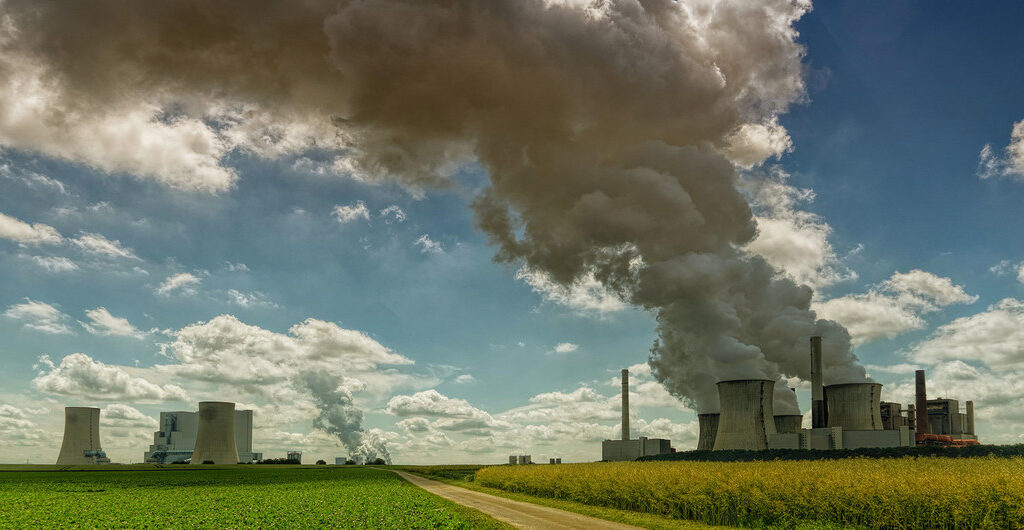
<p>Unsplash/Johannes Plenio<br /> Carbon dioxide levels continue at record levels, despite the economic slowdown caused by the COVID-19 pandemic.</p>
 WMO – Lockdown measures imposed worldwide to slow the spread of COVID-19 over the past year have led to some reductions in carbon dioxide (CO2) and other greenhouse gas emissions, but levels are still record high with any changes on the year in line with typical fluctuations, according to a report from the World Meteorological Organization.
CO2 levels saw another growth spurt in 2019 and the annual global average breached the significant threshold of 410 parts per million, according to the WMO Greenhouse Gas Bulletin. The rise has continued in 2020. Since 1990, there has been a 45% increase in total radiative forcing – the warming effect on the climate – by long-lived greenhouse gases, with CO2 accounting for four-fifths of this.
“Carbon dioxide remains in the atmosphere for centuries and in the ocean for even longer. The last time the Earth experienced a comparable concentration of CO2 was 3-5 million years ago, when the temperature was 2-3°C warmer and sea level was 10-20 meters higher than now. But there weren’t 7.7 billion inhabitants,” said WMO Secretary-General Petteri Taalas.
“We breached the global threshold of 400 parts per million in 2015. And just four years later, we crossed 410 ppm. Such a rate of increase has never been seen in the history of our records. The lockdown-related fall in emissions is just a tiny blip on the long-term graph. We need a sustained flattening of the curve,” said Taalas.
“The COVID-19 pandemic is not a solution for climate change. However, it does provide us with a platform for more sustained and ambitious climate action to reduce emissions to net zero through a complete transformation of our industrial, energy and transport systems. The needed changes are economically affordable and technically possible and would affect our everyday life only marginally. It is to be welcomed that a growing number of countries and companies have committed themselves to carbon neutrality,” he said. “There is no time to lose.”
2020 Trends
The Global Carbon Project estimated that during the most intense period of the shutdown, daily CO2 emissions may have been reduced by up to 17% globally due to the confinement of the population. As the duration and severity of confinement measures remain unclear, the prediction of the total annual emission reduction over 2020 is very uncertain.
Preliminary estimates indicate a reduction in the annual global emission between 4.2% and 7.5%. At the global scale, an emissions reduction this scale will not cause atmospheric CO2 to go down. CO2 will continue to go up, though at a slightly reduced pace (0.08-0.23 ppm per year lower). This falls well within the 1 ppm natural inter-annual variability. This means that on the short-term the impact of the COVID-19 confinements cannot be distinguished from natural variability, according to the Bulletin.