
Powerful answers to energy questions may be blowing in the wind
Wind farms can alter incoming wind
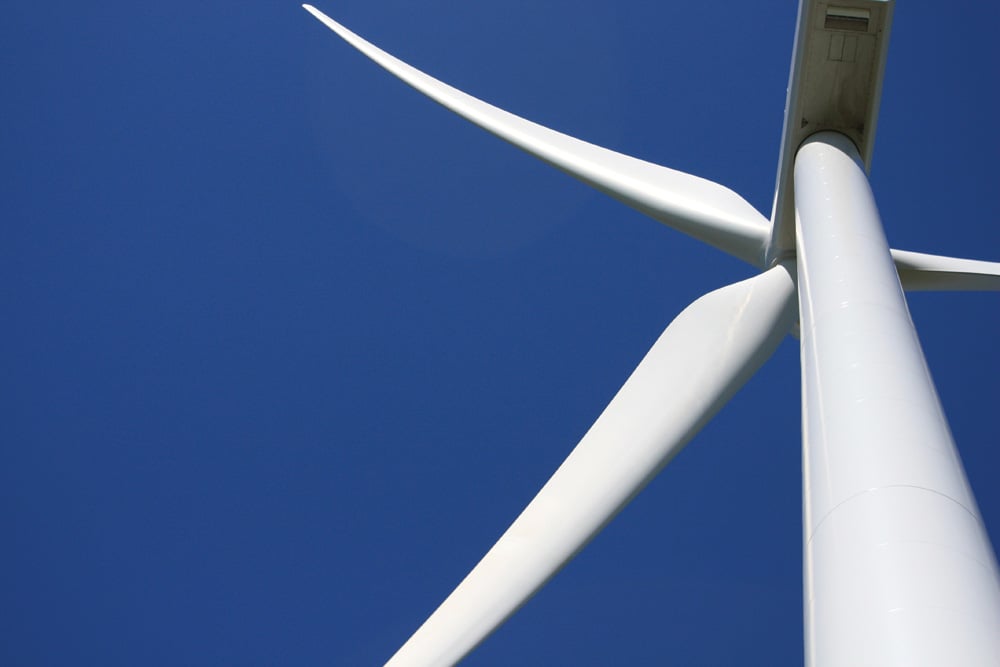
University of British Columbia Okanagan (WeatherFarm) – While wind farms have become a method of generating energy, researchers are now looking at the impact of these large farms on wind patterns and the surrounding environment.
Using large-scale simulations to better understand the way air moves across and within wind farms, researchers from UBC Okanagan and the Netherlands’ Delft University of Technology have developed a modelling framework that will help improve wind energy forecasts and productivity. The researchers hope to learn how large wind farms can alter natural wind patterns.
“Wind farms are getting so large that they can actually alter the structure of the incoming wind,” explained UBCO Associate Professor Joshua Brinkerhoff. “The structure they are researching, which engineers call the atmospheric boundary layer, monitors how the wind’s speed, temperature and pressure varies with altitude.”
Not only has locating where to put a wind farm a science in itself, he explained, but fine-tuning the location of individual turbines within a grouping is paramount to power output. While software helps guide the placement of the turbines to ensure the highest yield, poorly designed wind farms will generate less power than expected, making the wind farm uneconomical.
“Our modelling framework is among the first to clearly describe how wind farms alter the atmospheric boundary layer, which makes it tremendously valuable in helping engineers design better wind farms,” said Brinkerhoff.
Working alongside TU Delft the research team developed an open-source, finite-volume framework tailored for large-scale studies of how wind farms interact with the atmosphere. The modelling framework, called the Toolbox for Stratified Convective Atmospheres (TOSCA), is designed to conduct extensive simulations of the turbulence created by big wind farms in realistic atmospheric conditions.
TOSCA can address at least two of the significant challenges currently facing wind energy by simulating boundary layer turbulence over large areas and the simulation of an entire wind farm under realistic atmospheric flow conditions, explained Sebastiano Stipa, a doctoral student.
“The results of this research will lead to a better understanding of potential wind farm power estimates and an increase in their energy outputs,” said Stipa. “This new modelling framework can serve as a roadmap for the industry.”
Brinkerhoff noted the computer modelling can help when wind farms are being established, especially to forecast whether they can create energy efficiently.
“The most significant finding is that our model can capture the interaction between large wind farms and the oncoming wind,” he added. “To date, this hasn’t been captured properly, leading to overestimation of how much power a wind farm will produce. This kind of overestimation is financially disastrous for the wind farm operators.”