
Scientists’ views on possible future climate scenarios
Paris targets out of reach without more sustained action
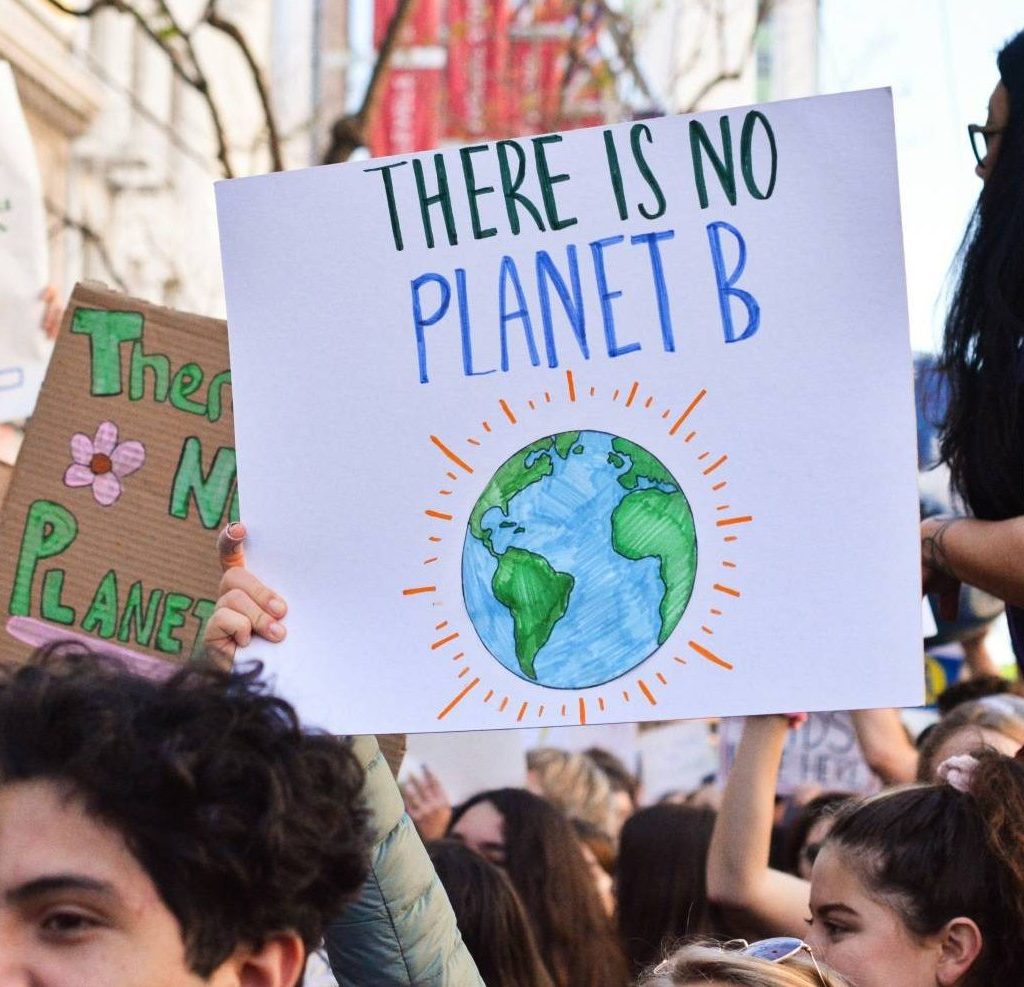
A rally warning about climate change. (Li-An Lim, Uplash)
Concordia University (WeatherFarm) – A survey of climate experts found that the majority believe that Earth is headed for an increase in global temperatures far higher than the 2015 Paris Agreement targets of less than two degrees Celsius.
The study showed two-thirds of the respondents, all authors on the Intergovernmental Panel on Climate Change (IPCC), believe we may achieve net zero carbon dioxide (CO2) emissions during the second half of this century. This indicated some optimism that mitigation efforts may be starting to bend the emissions curve toward what would be needed to achieve the Paris temperature goal.
A majority acknowledged the potential for atmospheric CO2 removal, with a median response indicating a belief that the technology could remove up to five gigatons of carbon dioxide (GtCO2) a year by 2050. That’s at the lower end of the range, which is believed to be necessary to meet the Paris targets.
“We wanted to survey some of the top climate experts in the world to get some insight into their perceptions of different future climate outcomes,” said Professor Seth Wynes, of the University of Waterloo. “These scientists also engage in important climate change communication, so their optimism or pessimism can affect how decision-makers are receiving messages about climate change.”
The 211 respondents to the survey were generally pessimistic about reaching the Paris targets given current policies, with 86 per cent estimating warming above 2 C by 2100. The median estimate was 2.7 C, which is expected to have catastrophic consequences for the planet.
“These responses are…a gauge of what the scientific community believes. The answers are surprisingly consistent with previous estimates of what would happen if our current climate policies continued without any increase in ambition, which range from about 2.5 to 3 C,” commented Prof. Damon Matthews, also at Waterloo.
Along with questions about the likelihood of future climate outcomes, the respondents were also asked to estimate their peers’ responses to the same questions.
“There was a strong correlation between what people believe and what they sense their peers believe,” Wynes said. “They had a bias to see their beliefs as representative of the larger group. This can indicate an overconfidence in their own beliefs, so we think this is a good opportunity for them to reevaluate what their peers actually believe.”
Matthews noted scientists’ views on possible climate scenarios are valuable, but other perspectives on the issues around climate change are necessary if we hope to slow it.
“Climate scientists certainly have expertise in climate systems and energy transitions, but it will be policy implementation and societal change that actually determine how quickly emissions drop,” he said. “Ultimately, the decision as to what we do and how we respond to the climate challenge is up to policymakers and the public that they represent, and I think the full range of outcomes is still very much on the table.”