Severe flooding, dryness in different parts of Brazil
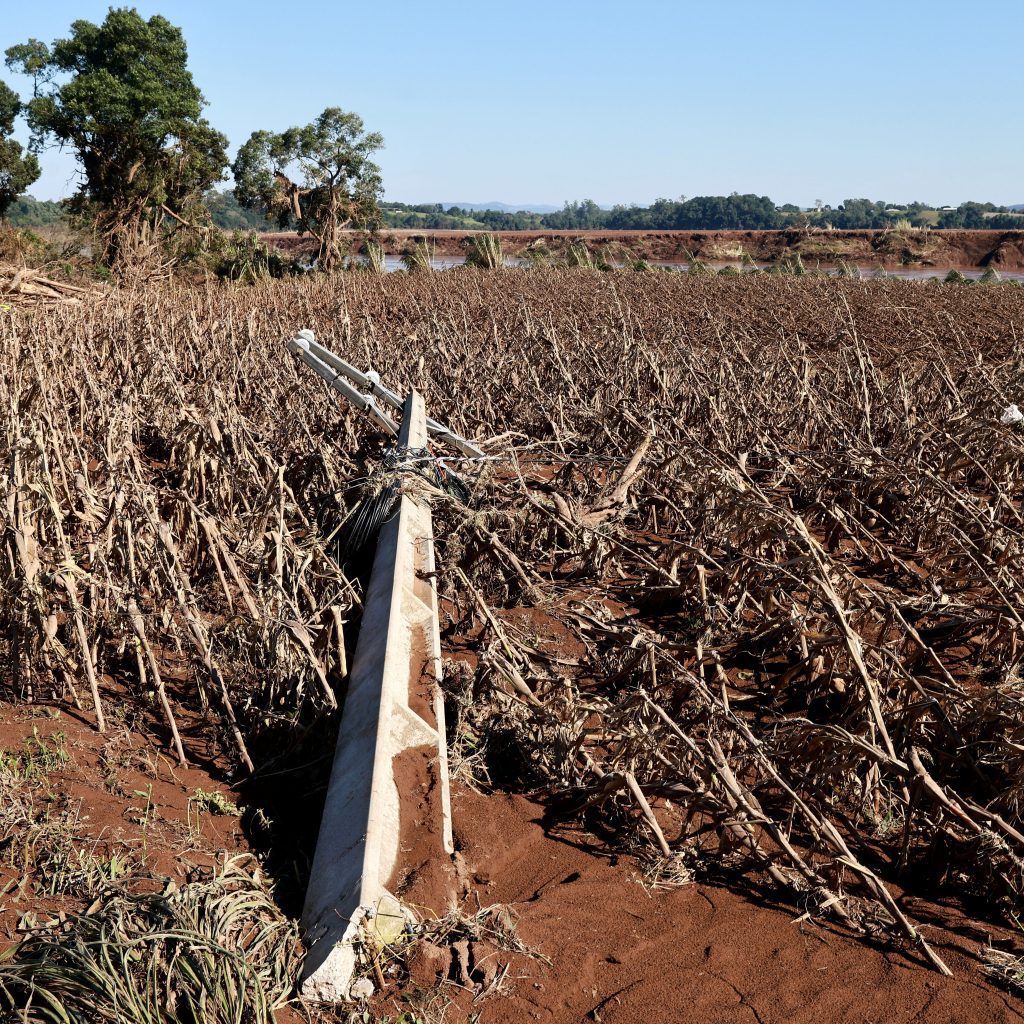
A view shows a corn field damaged by the floods in Colinas, in Rio Grande do Sul state, Brazil, May 6, 2024. REUTERS/Diego Vara
By Glen Hallick, MarketsFarm
Glacier Farm Media MarketsFarm – Brazil remains a contrast in field conditions with flooding in the south and dryness taking hold further to the north.
Brazil’s most southerly state of Rio Grande do Sul is “crazy wet,” said Drew Lerner, president of World Weather Inc. in Overland Park, Kan., pointing to the 300 to 625 millimeters it received during a recent 10-day stretch.
Lerner added that more rain is in the seven to 10-day forecast for Rio Grande do Sul, but such won’t be as intense. Nevertheless, widespread flooding has resulted in a tremendous amount of damage and loss of life.
In the meantime, dry conditions to the north is what he called “pretty classic for this time of year.”
“There’s a lot of heat and dryness right now in Mato Grosso do Sul, Parana and the immediate areas,” Lerner said.
“About 20 per cent of the safrinha (second crop) corn was planted much later than usual. So that 20 per cent is what is going to be at risk of running out of moisture during reproduction,” he explained, noting that stage runs from now until June.
The saving grace of that corn could be a cold air mass that’s to form in Argentina and more northward by the end of the week of May 12 to 18.
“That may bring some relief to the drying trend and reduce temperatures,” Lerner said, warning “if that rain fails to occur and it stays warm and dry, that 20 per cent of the corn that was planted late will certainly run the risk of lower yields.”
He added that by the end of May there should have been at least two more frontal systems that will aid the safrinha corn.
As for Argentina, Lerner said the weather is to be cooler for its corn and soybean harvests. Meanwhile wheat planting is most likely to begin in June with expectations of the soil having a strong moisture profile, however he pointed to the coming La Nina.
“With a La Nina developing, there will be a warmer and drier tendency in eastern Argentina, Uruguay and southern Brazil,” Lerner said.