
Shift to ‘flash droughts’ as climate warms
Onset of drought speeds up
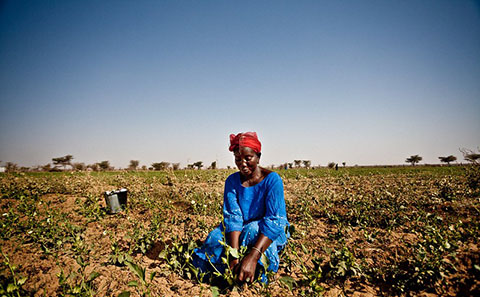
Flash droughts are becoming more frequent in several parts of the world. (Oxfam)
University of Southampton (WeatherFarm) – The research has shown that flash droughts, which start and develop rapidly, are becoming ‘the new normal’ for droughts, making forecasting and preparing for their impact more difficult.
Flash droughts can develop into severe droughts within a few weeks. They are caused by low precipitation and high evapotranspiration, which quickly depletes the soil of water. While they start quickly, the droughts can last for months, damaging vegetation and ecosystems, and triggering heat waves and wildfires.
A multinational group of researchers wanted to understand if there had been a transition from conventional ‘slow’ droughts to flash droughts and how this trend will develop under different carbon emission scenarios.
“Climate change has effectively sped up the onset of droughts,” said Professor Justin Sheffield of the University of Southampton and co-author of the paper. “While it varies between different regions, there has been a global shift towards more frequent flash droughts during the past 64 years.”
The transition to flash droughts is most notable over East and North Asia, Europe, the Sahara, and the west coast of South America. Some areas, such as eastern North America, Southeast Asia and North Australia, saw fewer flash and slow droughts, but the speed of drought onset had increased. In the Amazon and West Africa, there was no evidence of a transition to flash droughts; the Amazon saw an increase in slow droughts and West Africa had an increase in the frequency and extremity of both fast and slow droughts.
“As we head towards a warmer future, flash droughts are becoming the new normal. Our models show that higher-emission scenarios would lead to a greater risk of flash droughts with quicker onset which pose a major challenge for climate adaptation,” Sheffield added.
The transition to flash droughts may have irreversible impacts on ecosystems as they may not have enough time to adapt to a sudden lack of water and extreme heat. Forecasting flash droughts is also difficult as current approaches to predicting droughts use longer time scales.
The researchers said new approaches are needed to provide early warnings of flash droughts, as well as a better understanding of how natural ecosystems and humans will be impacted.