Warming climate to cut into corn yields, but irrigation blunts effect
Penn State – Warming global temperatures caused by climate change will cut into corn production, no matter which climate model eventually comes closest to reality, according to new research from Pennsylvania State University (Penn State).
The researchers evaluated the potential impacts of 18 warming scenarios, dictated by various atmospheric greenhouse gas concentrations, to determine the potential effects of future climate change on irrigated and rainfed corn yields from the 2020s through the 2090s. Although the research was focused on the United States Great Plains — in the heart of the nation’s top corn-producing region — the results are believed to have global implications.
To estimate yields, researchers employed the AquaCrop model — a crop-growth simulation developed by the Food and Agriculture Organization of the United Nations — to assess the effect of environment and management on crop production, predicting yield response to water. The study site is representative of agricultural management practices in the region and represents the most densely irrigated area in the Central Plains, which is a sub-region of the Great Plains.
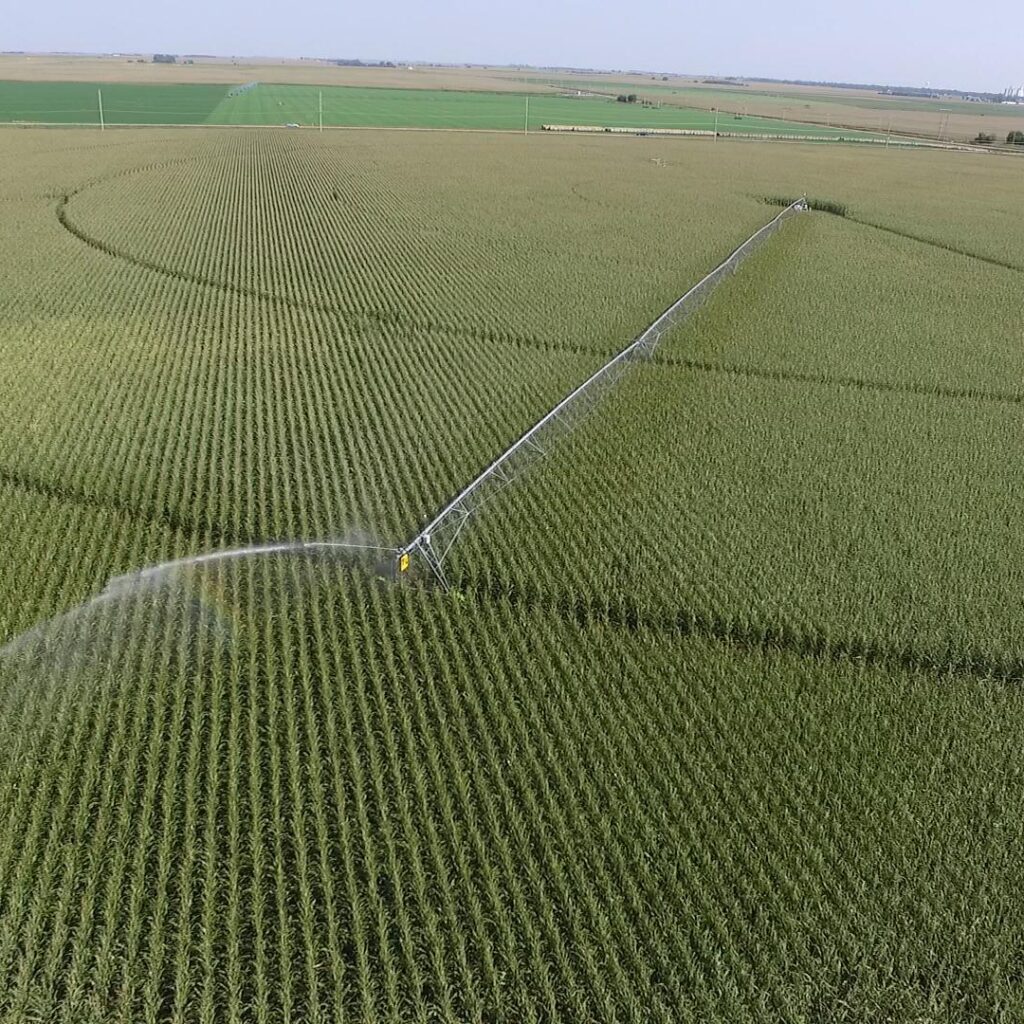
Corn is susceptible to environmental factors such as increased air temperature, increased radiation, vapor pressure deficit and humidity change, according to lead researcher Suat Irmak, professor and head of the Department of Agricultural and Biological Engineering in the College of Agricultural Sciences. He and his team noted that irrigated yields will be impacted much less than rainfed yields.
“In our study, depending on the atmospheric greenhouse gas concentrations and associated level of warming, we saw declines in rainfed corn yields ranging from 2.2 per cent to 21.5 per cent,” he said. “Under those same greenhouse gas concentrations, the range of declines was lower for irrigated yields — from 3.7 per cent to 15.6 per cent, due to irrigation technologies providing more stable crop growth conditions under water- and temperature-stress.”
Previous research by Irmak and others has shown that climate change already has impacted crop productivity of major agricultural crops across global agroecosystems. Previously, Irmak found that due to the increase in air temperature, spring frosts are occurring earlier and fall frosts are occurring later. This results in increased growing season length up to 20-plus days, which has significant implications for agricultural production in the U.S. and globally.
The research is important, Irmak noted, because by many measures corn is the country’s most important crop. According to the U.S. Department of Agriculture, corn accounts for 92 million acres of land use in the United States. With a continuous increase in air temperature and atmospheric moisture demand — coupled with increasingly limited water supply conditions and water quality degradation in the midwestern and western regions — we may see a substantial shift in corn production to eastern U.S. regions, he warned.
“These analyses can be valuable for policy-makers, decision-makers and agricultural and water resource managers/professionals to evaluate the future tradeoffs among irrigation and rainfed yields,” he said. “They need to know how landscapes are projected to perform under two scenarios with respect to climate change.”
In findings recently published in Agricultural Water Management, the researchers reported that, based on their modeling results, rainfed yields will decline up to 40 bushels per acre, whereas irrigated yields are projected to decline only 19 bushels per acre. Additionally, rainfed corn yield will be more variable than yields from irrigated corn under most of the global circulation models.
Those declines would be damaging because corn is substantially embedded into our lives, Irmak pointed out. It is used for animal feed, human consumption, fiber production and field production for ethanol. So, agricultural scientists need to analyze the anticipated losses in production and their implications, he suggested. “Climate change is real — that’s the bottom line,” he said. “We need to understand how this might impact our national policies and food supply.”