
Climate change driving food price shocks
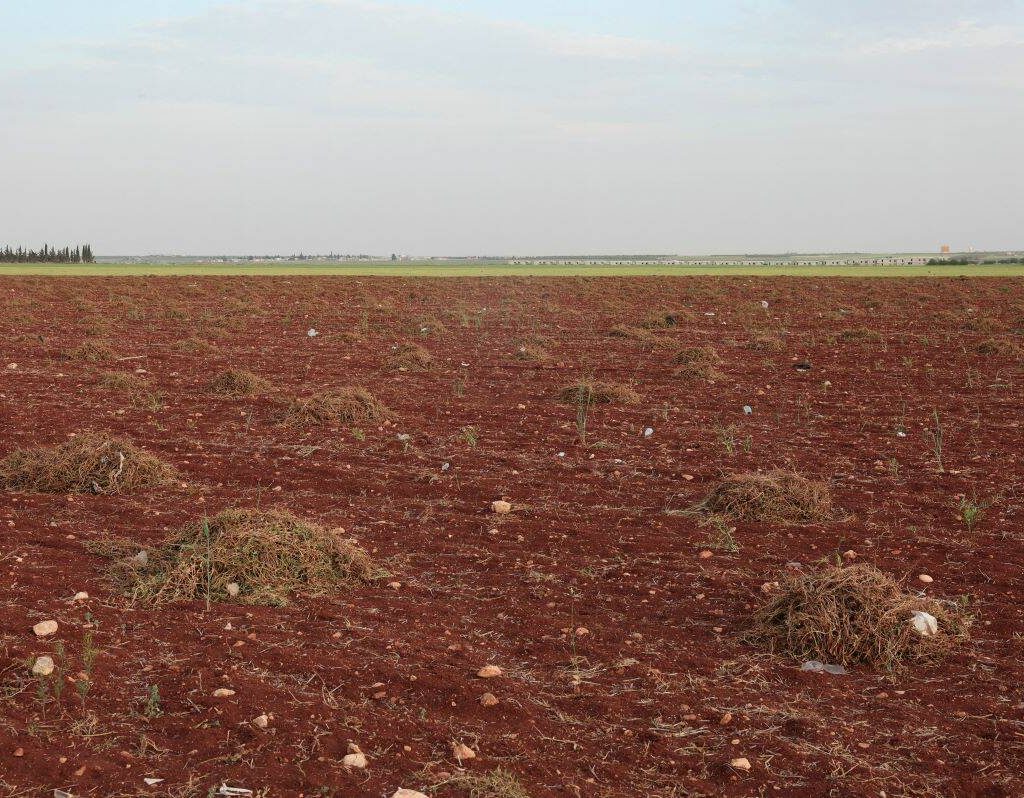
A view shows a dry farmland where crops have been uprooted, in Aleppo countryside, Syria, May 8, 2025. Photo: Reuters/Mahmoud Hassano
Barcelona Supercomputing Center – Foods all over the world are seeing prices rise sharply due to unprecedented weather events, which can pose greater risks for society, a study has found.
The study, conducted by an international team of scientists at the Barcelona Supercomputing Center, investigated 16 examples across 18 countries over a two-year period (2022 to 2024), where price spikes were associated with extreme heat, drought or heavy precipitation events, many of which were so extreme they exceeded all historical precedent prior to 2020.
Some examples include an 80 per cent jump in vegetable prices in California and Arizona in November 2022 after an extreme summer drought in the western United States, global cocoa prices nearly tripling in April 2024 after a heatwave in the Ivory Coast and Ghana two months earlier and Japanese rice prices jumping by 48 per cent in September 2024 after a heatwave in August.
Research by the Food Foundation showed that, on average, healthy food is twice as expensive per calorie as less healthy food. When prices increase, low-income households are likely to cut back on nutritious foods like fruit and vegetables because they can’t afford them.
“Until we get to net-zero emissions, extreme weather will only get worse, and it’s already damaging crops and pushing up the price of food all over the world,” said the study’s lead author Maximillian Kotz.
“People are noticing, with rising food prices number two on the list of climate impacts they see in their lives, second only to extreme heat itself. Sadly, when the price of food shoots up, low-income families often have to resort to less nutritious, cheaper foods. Diets like this have been linked to a range of health conditions like cancer, diabetes and heart disease.”
The world has currently warmed by an average of about 1.3 degrees Celsius above pre-industrial levels, but analysis by the United Nations has found that the current trajectory is for around 3 C of warming, which it says will be “debilitating.”
As early as December last year, experts at BSC, the World Meteorological Organization and the Met Office predicted that 2025 will be one of the top three hottest years.